
By All Things Bev | allthingsbeverages.co.za
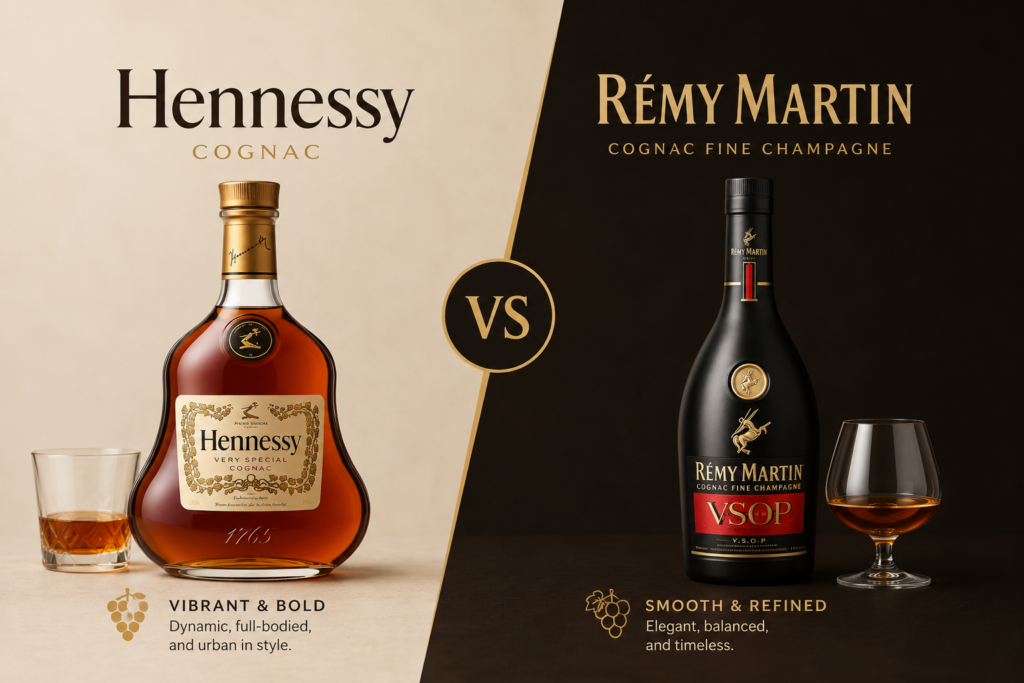
Walk into any bottle store, club, or upmarket braai in South Africa and you’ll find both of them. Hennessy and Rémy Martin — the two most famous names in cognac — sitting on the same shelf, priced similarly, and both carrying centuries of French heritage.
But here’s the thing: most people who drink one or the other have never actually stopped to understand what makes them different. The loyalty tends to be cultural — your crew drinks Henny, or your crew drinks Rémy. The debate gets heated. And very little actual cognac knowledge features in the conversation.
This article is here to change that. Here’s everything you need to know about both houses — their history, how they’re made, how they taste, how the ranges compare, and — honestly — which one to buy.
First: What Exactly Is Cognac?
Before we get into the brands, a quick grounding on what cognac actually is — because it’s not just fancy brandy, even though it is technically a type of brandy.
Cognac is a protected designation of origin. To be called cognac, a spirit must be produced in the Cognac region of southwest France, made from specific grape varieties (primarily Ugni Blanc), double-distilled in copper pot stills, and aged in French oak barrels for a minimum period determined by its classification.
The Cognac region is divided into six growing areas — called crus — ranked by the quality of their terroir:
- Grande Champagne — the finest. Chalky soils producing complex, long-aging eaux-de-vie with exceptional floral and fruity character.
- Petite Champagne — similar to Grande but slightly less complex.
- Borderies — smaller, rounder, nuttier. Produces the most elegant cognacs.
- Fins Bois — lighter, faster-maturing. Most cognac volume comes from here.
- Bons Bois — ordinary quality.
- Bois Ordinaires — the least prestigious.
Where a cognac house sources its grapes — and from which crus — is one of the biggest quality differentiators in the entire category. And this is where Hennessy and Rémy Martin take fundamentally different approaches.
The Classification System: VS, VSOP, XO — What It All Means
Before comparing the brands, you need to understand the label classifications — because they appear on every bottle:
VS (Very Special): The youngest eaux-de-vie in the blend must be aged at least 2 years. Entry-level cognac. Bold, spirited, designed for mixing.
VSOP (Very Superior Old Pale): Minimum 4 years aging. Significantly smoother and more complex than VS. The sweet spot for everyday sipping and cocktails.
XO (Extra Old): Minimum 10 years aging (raised from 6 years in 2018). Rich, complex, and deeply layered. For sipping neat or with a drop of water.
XXO (Extra Extra Old): A newer, even more prestigious category above XO — pioneered by Hennessy. Rémy Martin does not currently produce an XXO expression.
Napoleon: Between VSOP and XO in the hierarchy. Minimum 6 years. Less common but often excellent value.
Hennessy: The King of Volume
Founded: 1765 by Richard Hennessy (Irish-born, French-adopted) Owner: LVMH (Moët Hennessy Louis Vuitton) Market position: World’s best-selling cognac, commanding approximately 40% of global cognac sales Terroir philosophy: Blends across all four main crus — Grande Champagne, Petite Champagne, Borderies, and Fins Bois
Hennessy didn’t just become the world’s biggest cognac house by accident. Richard Hennessy, an Irish officer in the French army, established his house in Cognac in 1765 and his son James began exporting to the world within a generation. By the time the brand entered the American market, it had already built a global distribution network that no competitor could match.
Hennessy is celebrated for its bold and robust flavours, often characterised by notes of oak, vanilla, and rich fruitiness. The house style is consistent, recognisable, and designed for broad appeal — Hennessy’s tasting committee samples 50 to 100 eaux-de-vie every single day to maintain that consistency at scale.
Hennessy VS is a blend of about 40 different eaux-de-vie from the Bois ordinaire, Bon Bois, Borderies, Fins Bois, Grande Champagne, and Petite Champagne appellations, aged between two and a half and five years in French Limousin oak barrels.
Hennessy’s cultural reach is unmatched — particularly in hip-hop culture, where the brand has been referenced in more songs than any other alcohol brand. In South Africa, Hennessy is deeply embedded in township nightlife and aspirational culture in a way that no other cognac brand comes close to replicating.
The Hennessy Core Range
Hennessy VS ABV: 40% | SA price: approx. R650–R850 (750ml) The entry point — bold, spirited, and designed primarily for mixing. On the palate, Hennessy VS delivers grape juice, grilled almonds, and soft vanilla, with a medium-length finish that ends with a slight black pepper spice. Best in a cognac and cola, or mixed long with ginger beer.
Hennessy VSOP Privilège ABV: 40% | SA price: approx. R1,000–R1,300 (750ml) Hennessy VSOP blends from all four Cognac crus — Grande Champagne, Petite Champagne, Borderies, and Fins Bois. The result is rounded and consistent — dried fruit, vanilla oak, slight earthiness — recognisable and designed for broad appeal. Versatile enough for cocktails but smooth enough to sip.
Hennessy XO ABV: 40% | SA price: approx. R3,200–R3,600 (750ml) In 1870, Maurice Hennessy created Hennessy XO for his circle of friends and introduced an entirely new style of cognac. It remains the original XO — the expression that defined the category. Rich, complex, and warming, with notes of dark chocolate, dried fruit, spiced wood, and jasmine. A genuine special-occasion bottle.
Hennessy Paradis ABV: 40% | SA price: approx. R8,000–R12,000 (750ml) A blend of over 100 eaux-de-vie, some aged over 100 years. One of the most celebrated luxury cognacs in the world. Extraordinarily smooth and complex — floral, honeyed, and deeply layered.
Hennessy Richard ABV: 40% | SA price: R30,000+ The apex of the Hennessy range. Named after the founder. A blend of the rarest eaux-de-vie in Hennessy’s cellars. A collector’s item as much as a drinking experience.
Rémy Martin: The Terroir Purist
Founded: 1724 by Rémy Martin Owner: Rémy Cointreau Market position: Third-largest cognac house globally Terroir philosophy: Exclusively Fine Champagne — only Grande Champagne and Petite Champagne grapes used in the entire range
This is the defining difference between the two houses, and it matters enormously.
Rémy Martin’s exclusive use of Fine Champagne — a blend of Grande and Petite Champagne only — is a meaningful quality distinction. The chalky Grande Champagne terroir produces longer-aging eaux-de-vie with more complex aromatic development.
In practical terms: Rémy Martin uses only the top two of the six Cognac crus in all of its expressions — from the entry-level VS right up to Louis XIII. No Fins Bois. No Bons Bois. This isn’t just marketing. It’s a production philosophy that costs more to execute and produces a distinctly different — and many would argue more elegant — flavour profile.
Rémy Martin embodies elegance and finesse, offering a smooth and refined experience with hints of floral and nutty undertones.
Rémy Martin also prides itself on using only grapes harvested by estate growers — producers who cultivate their own vines, which gives the house more control over raw material quality than houses buying on the open market.
The Rémy Martin Core Range
Rémy Martin VS Supérieur ABV: 40% | SA price: approx. R600–R800 (750ml) Rémy Martin VS Supérieur is a unique cognac created especially for the South African market, carrying the signature elegance of the house at an accessible price. Lighter and more floral than Hennessy VS, with soft fruit and gentle spice. A more refined mixer.
Rémy Martin VSOP Fine Champagne ABV: 40% | SA price: approx. R1,000–R1,200 (750ml) The house’s signature expression and biggest seller. Rémy Martin VSOP is famous for its smooth texture and balanced taste, highlighting floral and fruity notes — particularly apricot and peach. Scents of vanilla, ripe apricot, baked apple and floral notes add complexity, the result of a long ageing process in French oak. This is where Rémy Martin makes its clearest quality statement relative to price.
Rémy Martin 1738 Accord Royal ABV: 40% | SA price: approx. R1,400–R1,800 (750ml) Named for the year King Louis XV granted Rémy Martin the exclusive right to expand his vineyards. A richer, more opulent expression than the VSOP — roasted oak, warm spice, dried fruit, and a long finish. Excellent neat, with a single ice cube.
Rémy Martin XO Excellence ABV: 40% | SA price: approx. R3,400–R3,800 (750ml) Rémy Martin XO is the signature blend of the Cellar Master, who expertly marries together over 400 different eaux-de-vie. Full-bodied and extraordinarily complex — described as full-bodied with orange bitters, dried fruits, and floral notes — this is one of the finest XO expressions available at any price. The benchmark for what Fine Champagne cognac can achieve.
Rémy Martin Louis XIII ABV: 40% | SA price: R40,000–R60,000+ The most famous luxury cognac in the world. A blend of up to 1,200 eaux-de-vie, some aged over 100 years, stored in century-old Tierçon barrels. Four generations of Rémy Martin cellar masters work on a single decanter. The Baccarat crystal decanter is itself a collector’s piece. Opening a bottle is a once-in-a-lifetime experience.
Head to Head: How They Actually Compare
VS vs VS — Entry Level
Hennessy VS: Bolder, more assertive, slightly woodier. Built for mixing. Rémy Martin VS: Lighter, more floral, greater elegance. Also good for mixing but noticeably more refined. Winner for sipping: Rémy Martin. Winner for cocktails: Either — personal preference.
VSOP vs VSOP — The Sweet Spot
This is where the debate gets most interesting — and most meaningful for everyday drinkers.
Rémy Martin VSOP edges Hennessy VSOP on pure liquid quality at the same price. But for many occasions — cocktails, celebratory pours, gifting — Hennessy’s brand recognition and consistency make it the practical choice.
The consensus among independent tasters: Rémy Martin VSOP is the more intellectually interesting cognac. Hennessy VSOP is the more socially safe choice.
As one cognac writer put it: buy Rémy Martin if you’re drinking it, buy Hennessy if you’re sharing it with people who care more about the name than the terroir.
Winner on liquid: Rémy Martin VSOP. Winner on cultural cachet: Hennessy VSOP.
XO vs XO — The Premium Battle
At XO level, both houses produce genuinely world-class cognacs. Hennessy XO is priced at approximately R3,299 in South Africa, while Rémy Martin XO sits at approximately R3,400–R3,600.
Hennessy XO is the original — darker, richer, more oak-driven, with chocolate and spice notes that feel indulgent. Rémy Martin XO is more complex and aromatic — the floral elegance of Grande Champagne terroir expressed at full maturity, with extraordinary length on the finish.
For many serious cognac drinkers, Rémy Martin XO is the more impressive liquid. For the occasion drinker and gift buyer, Hennessy XO carries more weight as a brand statement.
Winner: This is genuinely a draw — preference depends entirely on whether you favour richness and power (Hennessy) or elegance and complexity (Rémy Martin).
The Cultural Dimension: Why This Debate Matters in South Africa
In South Africa, cognac carries cultural weight that goes well beyond France. Hennessy in particular has become deeply embedded in SA urban culture — in the same way it defined American hip-hop, it has become a symbol of aspiration, celebration, and success in South African townships and nightlife.
There’s nothing superficial about that. Cultural significance is real. Sharing a Hennessy at a celebration means something to the people in the room, and that meaning has genuine value.
Rémy Martin, by contrast, tends to attract the more spirits-educated end of the SA market — drinkers who have moved beyond brand recognition to appreciate terroir, house style, and the craft behind what’s in the glass.
Neither positioning is better than the other. They’re just different audiences at different points in their cognac journey.
Cognac Cocktails: Which Works Better?
Both houses produce their own cocktail suggestions, but here are the classics and which cognac suits them best:
Cognac & Cola (or Cream Soda): Hennessy VS — the boldness cuts through the sweetness. The most popular way to drink cognac in SA.
Sidecar (cognac, triple sec, lemon juice): Rémy Martin VSOP — the floral complexity lifts the cocktail beautifully.
Old Fashioned: Hennessy XO or Rémy Martin 1738 — both work brilliantly with the bitters and sugar cube format.
Neat in a snifter: Rémy Martin XO — the aromatic complexity rewards slow sipping and warming in the glass.
Cognac Highball (with ginger ale and lime): Either VSOP works well. Light, refreshing, and surprisingly good.
Which Should You Buy? The Bottom Line
Buy Hennessy if:
- Cultural recognition matters — it’s the universally understood name at any South African celebration
- You’re mixing or making cocktails
- You’re gifting someone who will recognise and appreciate the brand
- You want the original XO experience
Buy Rémy Martin if:
- You want the best liquid quality relative to price — especially at VSOP level
- You appreciate terroir and the Fine Champagne distinction
- You’re sipping neat and want greater elegance and complexity
- You want to impress someone who actually knows cognac
For the braai: Hennessy VS mixed long. No debate. For a birthday gift: Hennessy VSOP if they’re brand-aware, Rémy Martin VSOP if they appreciate the finer details. For a special night in: Rémy Martin XO, neat, in a proper snifter glass. Slowly. That’s it.
FAQs
Is Hennessy or Rémy Martin better? They’re genuinely different rather than one being better. Hennessy is bolder, more consistent, and carries more cultural recognition. Rémy Martin uses higher-grade terroir exclusively and is considered more elegant — particularly at VSOP and above. Most independent tasters give the edge on liquid quality to Rémy Martin, while Hennessy wins on cultural prestige.
What is the difference between VS, VSOP, and XO cognac? VS must be aged at least 2 years; VSOP at least 4 years; XO at least 10 years. The longer the aging, the smoother, more complex, and more expensive the cognac.
Why is Hennessy so popular in South Africa? Hennessy’s deep connection with American hip-hop culture travelled globally, including to South Africa, where it became embedded in township and urban culture as a symbol of aspiration and celebration. It’s also widely distributed and consistently available at all major retailers.
What is Fine Champagne cognac? A legally protected blend of Grande Champagne and Petite Champagne eaux-de-vie, with Grande Champagne making up at least 50% of the blend. Rémy Martin uses only Fine Champagne across its entire range — considered the finest cognac terroir.
Is cognac the same as brandy? Cognac is a type of brandy, but not all brandy is cognac. Cognac must be produced in the Cognac region of France, from specific grapes, using regulated production methods. KWV’s South African brandy, for example, is world-class — but it cannot be called cognac.
The Bottom Line
Hennessy and Rémy Martin are both extraordinary houses producing genuinely world-class cognac. The real difference comes down to philosophy: Hennessy blends across multiple crus for consistency and cultural dominance; Rémy Martin restricts itself to the finest terroir for elegance and complexity.
Both deserve a place in your home bar. Start with a Rémy Martin VSOP for sipping. Keep a Hennessy VSOP for sharing. And if someone really special comes around, open the Rémy Martin XO.
Drink responsibly. 18+. Not for sale to persons under the age of 18.
For more spirit guides and South African beverage content, visit allthingsbeverages.co.za