
The Macallan Whisky: Scotland’s Liquid Gold and the World’s Most Collectable Single Malt
Note: It’s “whisky” (not whiskey) – Scottish and Canadian spirits use “whisky” while Irish and American use “whiskey“. The Macallan is proudly Scottish!
When a bottle of The Macallan 1926 sells for £2.18 million at auction – the most expensive bottle of wine or spirit ever sold – you know you’re dealing with something exceptional. Founded in 1824 by Alexander Reid in Speyside, Scotland, The Macallan has built an unrivalled reputation for sherry-cask-matured single malts that collectors, connoisseurs, and casual drinkers alike consider the pinnacle of whisky craftsmanship. With its “curiously small stills” (amongst the smallest in Speyside), obsessive focus on exceptional oak casks (which contribute up to 80% of flavor and 100% of natural color), and Six Pillars of excellence, The Macallan is the second or third highest-selling single malt Scotch globally. From the entry-level 12 Year Old (around R1,500-R2,200 in South Africa) to rare expressions costing millions, here’s everything you need to know about the whisky that’s become synonymous with Scottish excellence and liquid gold.
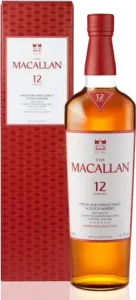
History:
The Macallan’s story begins in 1543 when the Easter Elchies Estate was first farmed in Speyside, Scotland. For centuries, local farmers made whisky on their Speyside farms using surplus barley during quieter winter months – a tradition that would eventually birth one of the world’s greatest distilleries.
In 1824, Alexander Reid – a barley farmer and schoolteacher – formally founded The Macallan distillery, becoming one of the first distillers in Scotland to be legally licensed following the 1823 Excise Act. The name “Macallan” (originally “Maghellan”) comes from the Gaelic “magh” (meaning fertile ground) and “Ellan” (referring to the Monk St. Fillan who held association with the church that stood on the estate until 1400).
The Macallan operated as a farm distillery initially, but its reputation for quality grew steadily. In 1868, James Stuart took the lease and rebuilt the plant, modernizing operations. His ownership ended in 1892 when he sold to Roderick Kemp – one of the giants of Victorian distilling who had previously owned Talisker. Kemp invested heavily in improvements, opening a new distillery facility that elevated The Macallan’s production capabilities.
Following Kemp’s death in 1909, the Roderick Kemp Trust was established to protect the family stake. The Kemp descendants – particularly the Shiach family – retained ownership for nearly a century, guiding The Macallan through critical growth periods.
The 1930s marked a pivotal decision: The Macallan began aging whiskies for extended periods, with the 12 Year Old distinguishing it from competitors relying on younger spirits. This commitment to maturation excellence became central to The Macallan identity.
Originally, The Macallan matured exclusively in oak sherry casks brought from Jerez de la Frontera, Spain. This sherry-cask maturation created the rich, fruity, complex character that became The Macallan’s signature. For decades, The Macallan remained synonymous with 100% sherry-cask maturation.
Before 1954, the distillery operated just 5 small stills. Responding to growing demand, The Macallan expanded to 12 stills by the early 1960s, then to 21 stills by the mid-1970s, greatly increasing capacity while maintaining quality through those “curiously small stills” (just 3,900 liters each – amongst Speyside’s smallest).
The 1980s brought transformation. Faced with declining blended whisky demand, The Macallan pivoted to single malts. Under the management team of Allan Shiach, Frank Newlands, Hugh Mitcalfe, and Willie Phillips, The Macallan launched marketing positioning it as the “Cognac of whisky” – a first-growth luxury product. This bold, sometimes irreverent campaign elevated The Macallan to global prominence.
In 1996, Highland Distillers acquired The Macallan. Three years later, in 1999, Edrington Group (which also owns Highland Park and Glenrothes) acquired Highland Distillers, bringing The Macallan under Edrington’s stewardship where it remains today.
The 2000s saw strategic expansion. In 2004, The Macallan introduced Fine Oak (renamed Triple Cask Matured in 2018) – expressions using both sherry-seasoned and ex-bourbon casks. While purists protested, this lighter, sweeter profile attracted new drinkers in emerging markets.
In 2013, the 1824 Range launched – color-coded expressions (Gold, Amber, Sienna, Ruby) without age statements, using color as communication. This controversial move prioritized flavor profiles over age declarations.
The 2010s brought infrastructure investment: a £100 million new distillery and visitor experience, designed by Rogers Stirk Harbour + Partners, opened in 2018. The stunning architectural achievement earned shortlisting for the Stirling Prize and won the RIAS Andrew Doolan Best Building in Scotland Award in 2019.
Meanwhile, The Macallan became the world’s most collectable whisky. Record-breaking auctions included: 2007 (Macallan 1926 sold for $54,000), 2010 (Macallan 64-year-old in Lalique decanter sold for $460,000), 2019 (Macallan Fine & Rare 1926 sold for £1.5 million), and 2023 (Macallan Valerio Adami 1926 sold for £2.18 million – the most expensive bottle of wine or spirit ever sold at auction).
Today, The Macallan operates 24 curiously small copper stills producing exceptional single malt for global distribution, maintaining its position as Scotland’s second or third highest-selling single malt.
Production Method:
The Macallan’s production philosophy centers on Six Pillars of excellence:
1. The Macallan Estate: The 485-acre estate in Speyside, farmed since 1543, provides pure water from the River Spey and barley from fertile ground.
2. Curiously Small Stills: The Macallan’s 24 spirit stills (3,900 liters each) are amongst Speyside’s smallest. Their unique size and shape give spirit maximum copper contact, concentrating the “new make” and providing rich, fruity, full-bodied flavors. The acutely angled lyne arms mean little time for copper to lighten spirit vapor, creating heavy, oily new make.
3. Exceptional Oak Casks: This is where The Macallan truly distinguishes itself. Up to 80% of flavor and 100% of natural color comes from casks. The Macallan was the first distillery creating “bespoke” casks – selecting specific trees (northern Spain, some American oak), specifying drying length, coopering type, and seasoning process.
It takes approximately 6 years to create a Macallan sherry-seasoned cask from tree to filling. Oak comes from two continents:
- American oak (Ohio, Missouri, Kentucky): Harvested at ~70 years old, more dense, creates bourbon and sherry casks, adds fresh fruit and vanilla notes with golden color
- European oak (Galicia, Asturias, Cantabria in Spain): More porous, 5x more tannins, provides rich dried fruits, sweet spice, and mahogany colors
Casks are cooperated by Tevasa in Jerez, then seasoned with oloroso sherry for specified duration before being transported to Speyside and filled with Macallan new make spirit.
4. Natural Color: No caramel coloring is added. Every vatting must replicate aroma, taste, AND exact hue using only cask influence – incredibly challenging given every cask has different tint.
5. Sherry Seasoned Oak Casks (Classic Range): Traditional 100% sherry-cask maturation using predominantly 500-liter casks. Large surface-to-volume ratio means longer maturation – The Macallan hits its stride in mid-teens.
6. Peerless Spirit: The combination of small stills, exceptional casks, patient maturation, and natural color creates The Macallan’s distinctive character.
Modern Ranges:
- Sherry Oak: 100% sherry-seasoned casks (12, 18, 25, 30, 40 year expressions)
- Double Cask: American + European sherry-seasoned oak (12, 15, 18 year)
- Triple Cask: American/European sherry + ex-bourbon casks (12, 15, 18 year)
Alcohol Percentage:
The Macallan core expressions are typically bottled at:
- 40% ABV: Most age-statement expressions (12, 18 year etc.)
- 43% ABV: Some special releases and cask strength variants
- 48-58% ABV: Cask strength expressions (Classic Cut, 10 Year Cask Strength at 58%)
The standard 40% ABV allows The Macallan’s complex sherry-cask character to shine without overwhelming alcohol heat. Higher ABV expressions deliver more intensity for connoisseurs.
Number of Calories:
At 40% ABV with no added sugars (pure single malt), The Macallan contains:
- 25ml shot (single): ~56 calories
- 35ml serving: ~78 calories
- 50ml double: ~112 calories
- 700ml bottle: ~1,568 calories total
All calories from pure alcohol. No carbs, no sugar, no fat – just barley, water, yeast, and cask influence.
Tasting Notes:
The Macallan 12 Year Old Sherry Oak
Appearance: Rich gold to amber
Nose: Sherry wood, dried fruits (raisins, sultanas), vanilla, ginger
Palate: Rich sherry influence with dried fruits, spice (ginger, cinnamon), orange, subtle oak
Finish: Medium length, sweet dried fruits, light spice
The Macallan 12 Year Old Double Cask
Appearance: Harvest sun gold
Nose: Creamy butterscotch, toffee apple, candied orange, vanilla custard, fresh oak
Palate: Deliciously honeyed, wood spices (ginger, nutmeg), citrus, balanced raisins and caramel
Finish: Oak lingers, warm, sweet, drying
The Macallan 18 Year Old (Sherry Oak/Double Cask)
Appearance: Rich mahogany (Sherry) or deep amber (Double Cask)
Nose: Luxurious dried fruits, rich sherry, subtle smoke, spice, orange
Palate: Complex layers of sherry sweetness, dried fruits, chocolate, spice, balanced oak
Finish: Long, sophisticated, evolving
Best Served With:
Neat: The traditional way to appreciate The Macallan’s complexity. Room temperature in Glencairn glass.
With Water: A few drops open up aromas and soften alcohol.
On Ice: One large ice cube for refreshing serve (though purists object).
Food Pairings:
- 12 Year: Cheese (aged cheddar, Manchego), smoked salmon, dark chocolate
- 18 Year: Ribeye steak, game meats, blue cheese, rich desserts
- Rare expressions: Cigars, contemplative solo enjoyment
Where to Buy (South Africa)
Norman Goodfellows: Macallan 12 Year Double Cask 750ml Checkers: The Macallan 12 Year Old Highland Single Malt 750ml Woolworths: The Macallan 12 Year Old Double Cask 750ml Mothercity Liquor: Macallan 18 Year Double Cask R5,999.99 (2025 Release), plus rare expressions Whisky Marketplace SA: Full Macallan range Whisky Emporium: Macallan 12 Year Double Cask Decanter Liquor: 83 Macallan expressions WhiskyShop.co.za: Macallan 12 Year Sherry Oak
Prices (South Africa, 2025)
Macallan 12 Year: R1,500-R2,200 Macallan 18 Year Double Cask: R5,999+ (2025 release) Macallan Rare/Limited: R10,000-R100,000+
Bar Pricing:
- 25ml shot: R80-R150 (12 Year)
- 25ml shot: R200-R350 (18 Year)
FAQs
Is it “whisky” or “whiskey”? Whisky (no ‘e’) – Scottish and Canadian spirits use “whisky.” Only Irish and American use “whiskey.” The Macallan is Scottish, so it’s always “whisky.”
Why is The Macallan so expensive? Exceptional oak casks (up to 80% of flavor), long maturation (minimum 12 years for entry level), sherry-cask scarcity, small-batch production, global demand, and collector status drive prices.
What makes The Macallan special? Curiously small stills, bespoke sherry-seasoned casks, 6-year cask creation process, natural color, patient maturation, and uncompromising quality create distinctive character unmatched in Scotch whisky.
Should I buy Sherry Oak, Double Cask, or Triple Cask? Sherry Oak: Traditional, richest, most classic Macallan. Double Cask: Balanced, approachable, honey sweetness. Triple Cask: Lightest, sweetest, bourbon influence. Start with Double Cask 12 Year (R1,500-R2,200).
Is The Macallan a good investment? Rare/limited Macallan expressions have appreciated significantly. However, buy to enjoy first – only invest what you can afford to lose. The 1926 appreciation is exceptional, not typical.
How should The Macallan be stored? Upright, cool (15-20°C), dark place. Once opened, consume within 2-3 years for optimal flavor. Unopened bottles last decades.
Is The Macallan gluten-free? Yes – distillation removes gluten proteins. Safe for most gluten sensitivities, though celiacs should verify comfort levels.
Why are there no age statements on some Macallans? The 1824 Range (Gold, Amber, Sienna, Ruby) uses color/flavor profiling instead of age. Allows flexibility in cask selection while maintaining consistent character.
Whether you’re discovering single malt Scotch, building a premium whisky collection, or celebrating life’s exceptional moments, The Macallan represents the absolute pinnacle of Scottish distilling excellence. From Alexander Reid’s 1824 farm distillery to £2.18 million auction records, from curiously small stills to bespoke sherry casks journeying from Spain, every drop embodies unrivalled mastery of wood and spirit.
This is whisky that demands respect, rewards patience, and delivers complexity money cannot easily buy elsewhere. Raise a glass to 200 years of excellence, to Scottish craftsmanship, and to the liquid gold that is The Macallan.
Slàinte mhath! (That’s Gaelic for “good health”) – or as we say in South Africa, Gesondheid to Scotland’s finest!