
Heineken: The World’s Most International Premium Beer Since 1864
When that iconic green bottle with the red star lands on your table, you’re not just getting a beer – you’re experiencing 161 years of Dutch brewing excellence that’s conquered 192 countries worldwide. From Gerard Adriaan Heineken’s bold 1864 purchase of De Hooiberg brewery in Amsterdam to becoming the world’s most international premium beer brand, Heineken represents uncompromised quality, scientific innovation, and that distinctive taste balance with subtle fruity notes from their legendary A-Yeast. Whether you’re watching the UEFA Champions League at your local, braaiing with mates, or discovering what makes premium lager truly premium, here’s everything you need to know about the beer that turned a 22-year-old’s vision into global liquid gold.
History
Gerard Adriaan Heineken was born into an Amsterdam merchant family in 1841. On February 15, 1864, at just 22 years old, he made a gutsy move: using capital from his mother Anna Geertruida van de Paauw, he purchased De Hooiberg (The Haystack) brewery on the Nieuwezijds Achterburgwal canal in Amsterdam. De Hooiberg had been a popular working-class brand since 1592, giving Gerard instant Amsterdam credibility.
But Gerard wasn’t satisfied with the status quo. “A good product is recommended by its use alone,” he declared, immediately focusing on brewing uncompromised premium lager beer using the latest scientific innovations. Revolutionary for the 1860s, he became the first brewer on the planet to introduce a quality control lab – proof that science and beer could create something exceptional.
In 1869, Gerard made a crucial decision: switching from traditional top-fermenting yeast to bottom-fermenting yeast (Bavarian-style lager). This produced clearer, purer beer that kept longer – his first major success. On January 11, 1873, Heineken’s Bierbrouwerij Maatschappij NV (HBM) was officially established with Gerard as President. A second brewery opened in Rotterdam in 1874, signaling ambitious expansion.
The breakthrough came in 1886 when Dr. Hartog Elion – a pupil of French chemist Louis Pasteur – developed the “Heineken A-yeast” in the Heineken laboratory. This proprietary yeast is still the key ingredient of Heineken beer today, creating that characteristic taste balance with subtle fruity notes that conquered the world. There will never be a need for Plan B.
Awards followed quickly. In 1875, still a relatively small brewery, Heineken won the Medaille d’Or (gold medal) at the International Maritime Exhibition in Paris. Soon after, the Dutch beer company became the largest exporter to France. In 1889, Heineken’s refreshing pilsner won the prestigious Grand Prix at the Paris Expo. One year later, Heineken started supplying the restaurant at the Eiffel Tower – talk about making it big! These two milestones still adorn Heineken’s labels today.
Gerard’s son, Henry Pierre Heineken, managed the company from 1917 to 1940, developing techniques to maintain consistent beer quality during large-scale production. After World War I, Heineken focused heavily on exports. Three days after Prohibition ended in the United States (1933), the first Heineken shipment landed in New York – making it the first imported beer in America post-Prohibition. From that day on, Heineken has remained one of America’s most successful imported beer brands.
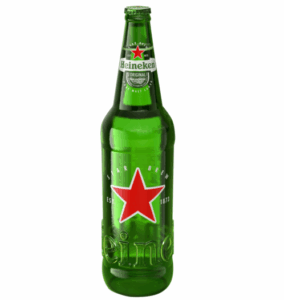
On June 1, 1941, Henry Pierre’s son, Alfred Henry “Freddy” Heineken, entered the company. Freddy became legendary for his marketing genius. In 1954, he introduced the oval logo with that distinctive “smiling e” (the tilted ‘e’ designed for friendly presentation). He also championed the iconic green bottle and red star – though the star temporarily changed to white after WWII to avoid communist associations, returning to red after the Soviet Union’s fall in 1991.
By 2011, 2.74 billion liters of Heineken-brand beer were produced worldwide. Today, Heineken operates in 192 countries, making it the world’s most international premium beer. The brand sponsors UEFA Champions League, Rugby World Cup, Formula One, and famously appeared in 8 James Bond films. In 2019, annual beer production across all Heineken Group breweries reached 24.14 billion liters with global revenues of €23.894 billion.
The original Amsterdam brewery closed in 1988 but lives on as the Heineken Experience museum – one of Amsterdam’s most popular tourist attractions where visitors explore brewing history and enjoy complimentary tastings.
Production Method
Heineken’s production is a natural brewing process enhanced by creativity and science. It starts with four pure ingredients: water, malted barley, hops, and the legendary Heineken A-yeast. No additives. Ever.
Water: Makes up over 90% of beer. Heineken uses high-quality water ensuring purity and consistency.
Malted Barley: Barley grains are malted (soaked, germinated, dried) to convert starches into fermentable sugars. The malt provides Heineken’s golden colour, body, and subtle sweetness.
Hops: Added during boiling for bitterness, aroma, and natural preservation. Heineken uses a proprietary hop blend creating that balanced taste without excessive bitterness.
Heineken A-Yeast: The secret weapon developed in 1886 by Dr. Elion (Louis Pasteur’s student). This pure yeast strain ferments sugars into alcohol and CO2 while creating Heineken’s characteristic taste balance with subtle fruity notes. No other brewery in the world uses this exact yeast.
The brewing process follows time-tested methods:
- Mashing: Malted barley is mixed with hot water, converting starches into fermentable sugars (wort).
- Boiling: The wort is boiled with hops, extracting bitterness and aromas while sterilizing the liquid.
- Fermentation: After cooling, Heineken A-yeast is added. Bottom-fermentation (lager style) occurs at cool temperatures for approximately two weeks, producing alcohol, CO2, and those signature fruity notes.
- Conditioning: The “green beer” is lagered (cold-stored) for several weeks, allowing flavors to mature and settle.
- Filtration: The beer is filtered for brilliant clarity – that crystal-clear appearance Heineken is famous for.
- Carbonation & Bottling: CO2 is added for perfect carbonation, then beer is bottled in those iconic green bottles or canned.
Since 1975, most Heineken-brand beer is brewed at their massive brewery in Zoeterwoude, Netherlands, though production now occurs in over 70 countries. Heineken maintains strict quality control globally – every drop must meet standards set in 1864.
Alcohol Percentage
Heineken is bottled at 5.0% ABV (Alcohol by Volume), placing it firmly in the standard premium lager category. This is the sweet spot for European pale lagers – strong enough to deliver satisfying flavor and relaxation, gentle enough for extended sessions.
At 5% ABV, Heineken delivers:
- Full-bodied flavor without overwhelming alcohol heat
- Sessionability for braais, sports viewing, and social occasions
- Perfect balance between strength and refreshment
- Standard premium lager strength globally recognized
For comparison:
- Heineken: 5.0% ABV
- Heineken Silver: 4.0% ABV (lighter variant)
- Heineken 0.0: 0.0% ABV (non-alcoholic)
- Castle Lager: 5.0% ABV (same)
- Amstel (also Heineken-owned): 5.0% ABV
- Light beers: 3.2-4.0% ABV
- Craft IPAs: 6.0-8.0% ABV
The 5% ABV is intentional – it’s the perfect strength for Heineken’s flavor profile. Higher ABV would create harsh alcohol burn; lower would lack body and presence. After 161 years, Heineken knows exactly what works.
Number of Calories
At 5% ABV with natural ingredients and no additives, a standard 330ml Heineken contains approximately 140-150 calories. This is standard for premium lagers worldwide.
Here’s the breakdown:
- 330ml bottle: ~140-150 calories
- 440ml can: ~187-200 calories
- 650ml bottle: ~275-300 calories
For a six-pack of 330ml bottles, you’re looking at approximately 840-900 calories total – about the same as a large burger or two slices of pizza.
The calories come from:
- Alcohol (5% ABV): Approximately 110 calories from alcohol (7 cal/gram)
- Residual carbohydrates: From malted barley (~30-40 calories)
- Zero fat, minimal protein
For comparison per 330ml:
- Heineken: ~140-150 calories
- Heineken Light (3.2% ABV): ~99 calories
- Heineken 0.0 (non-alcoholic): ~69 calories
- Average beer: ~135-150 calories
- Light beers: ~100-110 calories
- Craft IPAs: ~180-220 calories
Heineken’s calorie count is average for standard lagers – neither particularly high nor low. If you’re watching intake, Heineken Light or Heineken 0.0 offer lower-calorie alternatives without sacrificing that distinctive Heineken character.
Tasting Notes
Heineken delivers that distinctive premium lager profile millions worldwide recognize and love.
Appearance: Pale golden yellow with brilliant clarity. Crystal-clear body topped with a dense white head that persists beautifully, leaving attractive lacing down the glass.
Nose: Clean malt-forward aroma with subtle hop character. Expect light grain sweetness, fresh bread, and delicate floral hop notes. The Heineken A-yeast contributes subtle fruitiness – hints of green apple, pear, and light citrus. The nose is inviting and refreshing without any off-putting yeasty or skunky notes (when fresh).
Palate: Crisp, clean, and refreshing with balanced malt sweetness and gentle hop bitterness. The initial taste is slightly sweet from malted barley, transitioning to mild hop bitterness mid-palate. That characteristic Heineken A-yeast creates subtle fruity notes – apple, pear, light tropical hints. The carbonation is lively and refreshing, creating pleasant tingle on the tongue.
Mouthfeel: Medium-light body with crisp, clean texture. Well-carbonated without being harsh or fizzy. The mouthfeel is smooth and refreshing – perfect for quenching thirst.
Finish: Clean, crisp, and slightly dry with gentle hop bitterness lingering. The aftertaste is refreshing rather than cloying, inviting another sip. No sticky sweetness, no harsh alcohol burn – just pure, satisfying refreshment.
Heineken is designed for drinkability and refreshment rather than complexity. It’s not meant to be analyzed like craft beer – it’s meant to be enjoyed cold with friends, food, and good times. The consistency is key: every Heineken tastes identical worldwide, delivering reliable excellence bottle after bottle.
Where to Buy
Heineken’s global distribution means it’s available virtually everywhere in South Africa.
Specific Retailers
Shoprite/Checkers Product: Heineken Premium Lager Beer Bottles 6 x 330ml Product ID: 10204841PK1 Available: Shoprite and Checkers stores nationwide with liquor sections Website: shoprite.co.za / checkers.co.za
Ultra Liquors Product: Heineken Lager Sharing Pack 12 x 650ml Price: R234.99 (October 2025 special) Available: Ultra Liquors stores nationwide Website: ultraliquors.co.za Note: Competitive bulk pricing
Makro Product: Heineken 330ml NRB (Non-Returnable Bottle) Available: Makro stores with liquor sections Formats: 6-packs, 24-packs Website: makro.co.za
Pick n Pay Available: Pick n Pay stores with liquor sections Formats: Various pack sizes
Mothercity Liquor (Cape Town – Online) Product: Heineken 330ml NRB Bottle Size: 330ml | Alc: 5% | Origin: Netherlands Delivery: 0-2 days (Cape Town), 2-5 days (rest of SA) Website: mothercityliquor.co.za
Takealot Product: Heineken Beer NRB 24 x 330ml Website: takealot.com Delivery: Fast nationwide delivery Note: Convenient online ordering
Nox Cape Town Product: Heineken 330ml Glass Bottle x 6 Website: shop.noxrentals.com Note: Pair with locally made chips and biltong
Norman Goodfellows Multiple locations: Johannesburg, Pretoria, Cape Town, Durban Products: Heineken range including Original, Silver, 0.0 Website: ngf.co.za
Bars, Pubs, Restaurants Available virtually everywhere – from shisanyamas to upmarket restaurants On tap at many establishments Widely stocked nationwide
Prices (South Africa, 2025)
Retail Pricing:
6-Pack (6 x 330ml bottles): R110-R140
- Budget retailers (Shoprite): R110-R125
- Standard retailers: R120-R135
- Premium/convenience stores: R130-R140
12-Pack (12 x 650ml bottles): R230-R260
- Ultra Liquors special: R234.99 (October 2025)
- Standard pricing: R240-R260
24-Pack (24 x 330ml bottles): R410-R480
- Makro/bulk retailers: R410-R450
- Standard retailers: R440-R480
Single Bottles:
- 330ml: R20-R25
- 650ml: R24-R30
Bar/Restaurant Pricing:
- Heineken 330ml bottle: R35-R55
- Heineken draught pint: R40-R65
- Mid-range establishments: R45-R60
- Upmarket venues: R55-R80
- Clubs (Sandton, Cape Town, Umhlanga): R60-R90
Pricing Notes:
- Prices vary by retailer, region, and promotions
- Bulk buying (24-packs) offers best value per unit
- Watch for specials during major sporting events (UEFA Champions League, Rugby World Cup)
- Heineken is priced as premium import despite some local production
FAQs: Everything You Need to Know
Why is Heineken in a green bottle? The green bottle is iconic branding that’s been Heineken’s signature since the early 20th century. However, green glass offers less UV protection than brown glass, meaning light can create “skunky” flavors (light-struck beer). Heineken’s solution? Distribute fresh beer quickly and educate consumers to store bottles away from light. The green bottle is so recognizable worldwide that Heineken won’t change it – it’s part of their identity.
What is Heineken A-yeast? Heineken A-yeast is a proprietary yeast strain developed in 1886 by Dr. Hartog Elion (student of Louis Pasteur) exclusively for Heineken. This pure bottom-fermenting yeast creates Heineken’s characteristic taste balance with subtle fruity notes (apple, pear). No other brewery uses this exact yeast – it’s Heineken’s secret weapon and has been used for 139 years without change.
Is Heineken made in South Africa? Some Heineken sold in South Africa is brewed locally under license by Heineken South Africa (which acquired control of Distell and Namibia Breweries in recent years). However, much of it is still imported from Heineken’s Netherlands breweries. The recipe and quality standards are identical regardless of brewing location – Heineken maintains strict global consistency.
What’s the difference between Heineken and Heineken Silver? Heineken Original (5% ABV) is the flagship premium lager available since 1873. Heineken Silver (4% ABV) launched in 2023 as a lighter, lower-calorie variant brewed using ice-cold lagering at -1°C for extra crispness. Silver has fewer calories (77 vs 140 per 330ml) and lower alcohol but maintains Heineken quality. Choose Original for full flavor, Silver for lighter refreshment.
Is Heineken 0.0 real beer? Heineken 0.0 is non-alcoholic beer (0.0% ABV) launched in 2019. It tastes like beer with zero alcohol – same malty and fruity flavors from Heineken A-yeast, just 69 calories per serving. The alcohol is removed after brewing through gentle vacuum distillation, preserving flavor. It’s perfect for designated drivers, pregnancy, health reasons, or anyone embracing sober-curious lifestyles.
Why does Heineken have a red star? The five-pointed red star has been Heineken’s symbol since the late 1800s, representing beer’s ingredients (water, barley, hops, yeast, and the “magic” of brewing). In the 1930s-1951, the star was temporarily changed to white to avoid association with communism during/after WWII. After the Soviet Union’s fall in 1991, Heineken returned to the original red star – it has no political meaning.
Can you drink Heineken past the best-before date? Heineken won’t harm you past the best-before date, but flavor degrades over time. Heineken is best consumed fresh (within 3-6 months of bottling) for optimal taste. Old beer develops oxidized, cardboard-like flavors and loses hop character. Always check the date code on bottles and store beer cool, dark, and upright for maximum freshness.
What food pairs well with Heineken? Heineken’s balanced profile makes it incredibly versatile. It pairs beautifully with burgers, pizza, braai meats (boerewors, steak, chicken), seafood (fish and chips, prawns), Mexican food (tacos, burritos), Thai cuisine, cheese platters, and salty snacks (biltong, chips, nuts). The crisp, refreshing character cuts through rich, fatty foods while the malt sweetness complements grilled flavors.
Whether you’re discovering premium lager for the first time, remaining loyal to that iconic green bottle, or simply curious about what’s made Heineken the world’s most international beer, one thing is clear: 161 years of uncompromised quality, scientific innovation, and that legendary A-yeast have created something genuinely special.
From Gerard Adriaan’s gutsy 1864 purchase to conquering 192 countries, from surviving Prohibition to sponsoring James Bond films, from Paris Expo gold medals to your local braai – Heineken proves that when you start with pure ingredients, embrace science, and never compromise on quality, you create liquid excellence that stands the test of time.
So crack open that green bottle, hear that satisfying “psst,” pour into a glass (or drink straight from the bottle – we won’t judge), and taste 161 years of Dutch brewing mastery. Cold, crisp, refreshing Heineken with that signature red star and smiling ‘e’ – exactly as Gerard Adriaan intended back in 1864.
Proost (that’s Dutch for “cheers”) – or as we say in South Africa, Gesondheid to the world’s most international premium beer!