
By All Things Beverages | allthingsbeverages.co.za
Some cocktails are trends. They arrive, dominate Instagram for six months, and quietly disappear from menus. Then there are the classics — the drinks that have been ordered at bars for decades, survived every wave of cocktail fashion, and still get requested every single night from Cape Town to Tokyo.
This is the list of the latter.
Every year, Drinks International surveys 100 of the world’s best bars across 30+ countries to rank the most popular classic cocktails globally. Combined with Google search data, social media trends, and bar industry reports, we have a very clear picture of what the world is actually drinking in 2026.
The results are fascinating — and a few might surprise you. Here are the most popular cocktails in the world, how to make them, and how to order them in South Africa.
- 1. Negroni — The World's Most Popular Cocktail
- 2. Daiquiri — Simplicity Perfected
- 3. Old Fashioned — The Original
- 4. Espresso Martini — The Coffee Cocktail Phenomenon
- 5. Margarita — The World's Most Ordered Cocktail
- 6. Mojito — Cuba in a Glass
- 7. Aperol Spritz — The Aperitivo Phenomenon
- 8. Whiskey Sour — The Timeless Template
- 9. Cosmopolitan — The Comeback Classic
- What's Trending in 2026?
- A Quick South African Cocktail Note
- FAQs
- The Bottom Line
1. Negroni — The World’s Most Popular Cocktail
Spirit base: Gin Flavour profile: Bitter, herbal, sweet, complex Occasion: Aperitif, sophisticated sipping, anytime
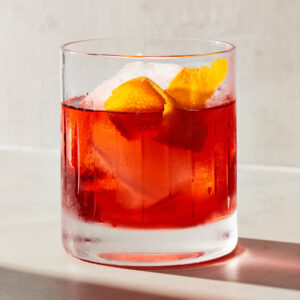
The Negroni has held the number one spot at the world’s best bars for four consecutive years according to Drinks International’s Cocktail Report 2025 — and shows no signs of giving up the throne. In 2026, it’s firmly entrenched as the bartender’s cocktail of choice and the drink that more people choose when they want to signal that they know what they’re doing.
The origin story is perfectly Italian: in 1919, Count Camillo Negroni walked into a Florence bar and asked bartender Fosco Scarselli to strengthen his Americano by replacing the soda water with gin. The drink was born in a single audacious request.
It uses exactly three ingredients in equal measure: gin, Campari, and sweet vermouth. Stirred over ice, strained into a rocks glass over a large ice cube, and finished with an orange peel. Three ingredients that create something infinitely greater than the sum of their parts — the gin’s botanicals, Campari’s bitter citrus, and vermouth’s herbal sweetness achieving a balance that seems both perfect and impossible.
The Negroni’s success has spawned countless variations: the Negroni Sbagliato (Campari and vermouth topped with Prosecco instead of gin), the White Negroni (Lillet Blanc and gentian-based spirits instead of Campari and vermouth), and the Boulevardier (bourbon instead of gin, which may be even better). All excellent. None quite as perfect as the original.
How to make it:
- 30ml gin (Tanqueray works beautifully)
- 30ml Campari
- 30ml sweet red vermouth (Martini Rosso)
- Stir over ice for 30 seconds. Strain into a rocks glass over a large ice cube. Garnish with an orange peel twisted over the glass.
In South Africa: Available at virtually every cocktail bar. Order it at Cause Effect in Cape Town or Sin + Tax in Johannesburg and you’ll get a masterclass in how it should be made.
2. Daiquiri — Simplicity Perfected
Spirit base: White rum Flavour profile: Fresh, sour, sweet, clean Occasion: Pre-dinner, warm weather, anytime you want something brilliant and simple
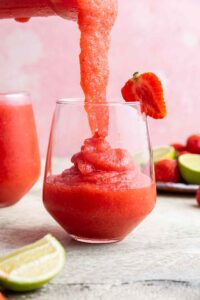
The Daiquiri has been in the top five at the world’s best bars for years and is widely considered the bartender’s test of skill — a three-ingredient cocktail where there’s nowhere to hide. If the balance is even slightly off, you know immediately.
Named after a Cuban beach town near Santiago de Cuba, the Daiquiri was invented in the early 1900s and popularised by American soldiers, writers (Hemingway famously drank a variation of it daily), and the Havana bar La Floridita, which claims to be the cocktail’s spiritual home.
The formula is deceptively simple: white rum, fresh lime juice, sugar syrup. Shaken hard with ice, double strained into a chilled coupe glass. No garnish necessary. The best Daiquiris use premium white rum (Bacardi is the world’s most common choice, and the classic option), fresh lime squeezed to order, and perfectly balanced sweetness.
What makes an outstanding Daiquiri versus a merely good one is the ratio and freshness of ingredients — and this is exactly why it tests bartenders. A great Daiquiri is one of the most refreshing and satisfying drinks ever created.
How to make it:
- 60ml white rum (Bacardi Superior)
- 22ml fresh lime juice
- 15ml simple syrup
- Shake hard with ice. Double strain into a chilled coupe. No garnish, or a thin lime wheel.
SA twist: Try a local variation using South African cane spirit (like Richelieu’s range) or a pineapple-infused rum Daiquiri with Durban-grown pineapple juice — incredible.
3. Old Fashioned — The Original
Spirit base: Bourbon or rye whiskey Flavour profile: Rich, warm, spirit-forward, subtly sweet Occasion: Slow sipping, after dinner, when you want to feel sophisticated
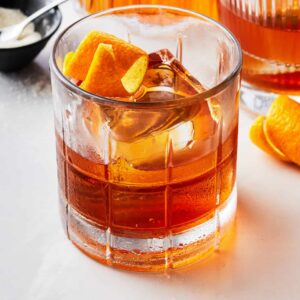
If the Negroni is the world’s favourite at high-end bars, the Old Fashioned is arguably the world’s most historically significant cocktail — because it’s the original cocktail. When the word “cocktail” first appeared in print in 1806, it was defined as a drink of spirit, sugar, water, and bitters. That is exactly what an Old Fashioned is. Every other cocktail in history has evolved from this formula.
It experienced a massive revival after appearing in Mad Men as Don Draper’s drink of choice, and has been a top-five global cocktail ever since. In 2026, it’s the most significant bourbon cocktail in the world and the definitive spirit-forward drink for serious drinkers.
The formula: bourbon (or rye) whiskey, sugar, Angostura bitters, and a large ice cube. The technique matters — the sugar and bitters are muddled briefly, the whiskey added and stirred gently over the large ice cube, and finished with a twist of orange peel and optionally a Luxardo cherry.
Modern variations have exploded: smoked Old Fashioneds served under a cloche of wood smoke, brown butter fat-washed versions, maple syrup substitutions, Japanese whisky versions — the formula is endlessly adaptable.
How to make it:
- 60ml bourbon or rye (Jim Beam, Maker’s Mark, or locally try Bain’s Cape Mountain Whisky)
- 1 sugar cube (or 5ml simple syrup)
- 2-3 dashes Angostura bitters
- Muddle sugar and bitters briefly. Add whiskey and a large ice cube. Stir gently 20-30 times. Garnish with an orange twist and optional cherry.
SA twist: Made with Bain’s Cape Mountain Whisky — South Africa’s own award-winning grain whisky — this becomes a genuinely remarkable local variation on the global classic.
4. Espresso Martini — The Coffee Cocktail Phenomenon
Spirit base: Vodka Flavour profile: Coffee-rich, slightly sweet, smooth, energising Occasion: After dinner, late night, the transition from eating to dancing
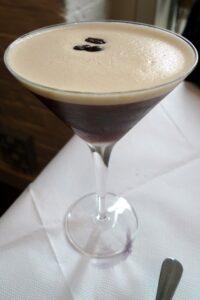
No cocktail has had a more remarkable comeback story in recent memory. Espresso Martini consumption reportedly jumped from 2% to 15% of cocktails ordered between 2022 and 2024 — one of the most dramatic rises in the history of modern cocktail culture. In 2026, it’s firmly in the global top five and showing no signs of slowing.
The drink was created by legendary British bartender Dick Bradsell in 1983 at the Soho Brasserie in London. A young woman — reportedly a supermodel — sat at his bar and asked for something to “wake me up and then f*** me up.” Bradsell combined fresh espresso with vodka and coffee liqueur, shook it hard, and created the most iconic coffee cocktail of all time.
Its revival is driven by multiple forces: the global explosion of coffee culture, its Instagram-perfect presentation (the three-bean garnish on a perfect foam cap has been photographed millions of times), and its appeal as a late-evening drink that bridges dinner and dancing. In 2026, variations include blueberry and pistachio espresso martinis, dark chocolate versions, oat milk editions, and cold brew riffs — but the classic remains the most ordered.
How to make it:
- 50ml vodka
- 30ml freshly brewed espresso (cooled slightly)
- 20ml coffee liqueur (Kahlúa or Mr Black)
- Shake vigorously with ice for 15-20 seconds. Double strain into a chilled martini glass. Garnish with three coffee beans.
Pro tip: The key to a perfect foam is a vigorous shake. The colder your ingredients and the harder you shake, the better the crema on top.
In SA: The Espresso Martini is now on virtually every cocktail menu in Cape Town and Johannesburg. For a local twist, try it made with Jozi- or Cape Town-roasted specialty coffee.
5. Margarita — The World’s Most Ordered Cocktail
Spirit base: Tequila Flavour profile: Citrusy, tangy, salty, refreshing Occasion: Hot weather, Mexican food, anytime you need something crowd-pleasing
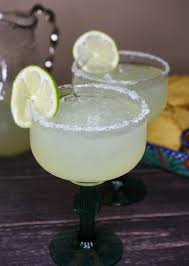
While the Negroni rules the world’s best bars, the Margarita rules the world’s volume. It remains America’s best-selling cocktail — the most ordered drink in bars overall — and one of the most popular across almost every market. It’s the cocktail that introduced tequila to the mainstream.
The origin stories are contested and multiple — various bartenders and socialites in Mexico and the American Southwest claim invention across the 1930s-50s. What’s agreed is that the combination of tequila, lime, and triple sec (usually Cointreau or Grand Marnier at quality bars, cheap orange liqueur at less attentive ones) in a salt-rimmed glass was a stroke of collective genius.
The rise of premium tequila is driving a Margarita renaissance. Historic mass-market brands are declining while artisanal reposado and añejo tequilas are growing rapidly — and the cocktail benefits enormously when made with a quality blanco or reposado rather than a budget mixer. A Tommy’s Margarita (agave syrup instead of triple sec, no salt) has become the preferred variation at high-end bars.
How to make it:
- 50ml blanco tequila (Patrón Silver, Don Julio Blanco, or locally Casa Tequila)
- 25ml fresh lime juice
- 20ml Cointreau or triple sec
- Salt rim optional
- Shake with ice. Strain into a salt-rimmed rocks glass over ice, or serve straight up in a coupe.
In SA: Casa Tequila in Cape Town and Jo’burg serves benchmark Margaritas. The cocktail is also excellent when made with a smoky mezcal instead of tequila — called a Smoky Margarita or Mezcal Margarita, and growing rapidly.
6. Mojito — Cuba in a Glass
Spirit base: White rum Flavour profile: Minty, citrusy, light, refreshing Occasion: Hot days, beach bars, summer entertaining
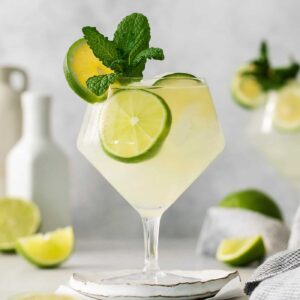
The Mojito is Cuba’s most famous export after Havana Club rum itself. Dating back to the 1500s in a proto form (a drink called El Draque made with a primitive version of rum, sugar, lime, and local herbs), the modern Mojito solidified in 19th-century Havana and was another of Hemingway’s favourites at La Bodeguita del Medio.
Its combination of white rum, fresh mint, lime juice, sugar, and soda water over crushed ice is one of the most refreshing drinks ever created — particularly in hot weather, which is exactly why it’s the world’s most popular summer cocktail. It’s also endlessly customisable: strawberry Mojitos, watermelon Mojitos, passion fruit Mojitos, spiced rum variations — the template is beloved precisely because it works so well with modifications.
How to make it:
- 50ml white rum (Bacardi or Havana Club)
- 25ml fresh lime juice
- 15ml simple syrup
- 8-10 fresh mint leaves
- Soda water to top
- Crushed ice
- Gently muddle mint with lime juice and syrup. Add rum and crushed ice. Top with soda. Garnish with a sprig of mint and a lime wedge.
In SA: Perfect for summer braai season. For a local twist, try it with spiced rum and add some fresh guava — outstanding.
7. Aperol Spritz — The Aperitivo Phenomenon
Spirit base: Aperol (Italian bitter liqueur) Flavour profile: Light, bittersweet, orange, fizzy Occasion: Afternoon drinks, pre-dinner, summer, outdoor entertaining
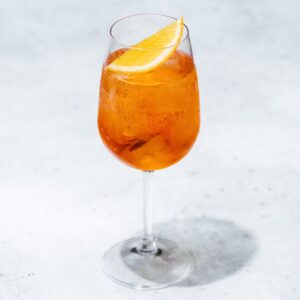
The Aperol Spritz has transformed how the world thinks about aperitivo culture. A few years ago it was barely known outside Italy. Now it’s one of the most ordered drinks in the world — and one of the most recognisable cocktails by sight, its deep orange colour in a wine glass instantly identifiable from across the room.
The formula couldn’t be simpler: Aperol, Prosecco, and a splash of soda water, served over ice with an orange slice in a large wine glass. That’s it. The brilliance is in the accessibility — low ABV, low effort, visually striking, and genuinely delicious on a warm afternoon. It’s the perfect gateway into the world of bitter Italian aperitivi.
How to make it:
- 90ml Prosecco
- 60ml Aperol
- Splash of soda water
- Build in a large wine glass over ice. Stir gently. Garnish with an orange slice.
In SA: Perfect for summer afternoons. Aperol is widely available at Pick n Pay Liquor, Checkers Liquorshop, and Norman Goodfellows. At R250–R350 a bottle, a night of Aperol Spritzes is very kind to your wallet.
8. Whiskey Sour — The Timeless Template
Spirit base: Bourbon Flavour profile: Tart, sweet, whiskey-forward, silky (with egg white) Occasion: Pre-dinner, versatile, all-rounder
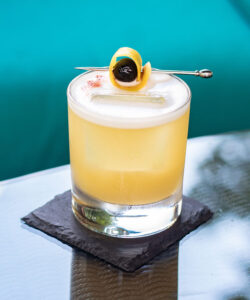
The Whiskey Sour is one of the oldest cocktail families — the “sour” template (spirit, citrus, sweetener) dates back to the 1860s and spawned the Daiquiri, Margarita, Cosmo, and dozens of other modern classics. The Whiskey Sour itself remains one of the most ordered cocktails in the world.
Made with bourbon, lemon juice, and sugar syrup — optionally with an egg white for a silky, frothy texture and a beautiful foam — it’s the perfect balance of the barrel richness of bourbon against the sharpness of fresh lemon. The egg white version (technically a Boston Sour) has become the standard at quality bars, with the foam making it one of the most visually appealing classical cocktails.
How to make it:
- 50ml bourbon (Buffalo Trace, Maker’s Mark, or Bain’s)
- 25ml fresh lemon juice
- 15ml simple syrup
- 1 egg white (optional but recommended)
- Dry shake first (without ice) for 10 seconds to emulsify egg white. Add ice, shake again hard. Strain into a rocks glass over ice or a coupe straight up. Garnish with an Angostura bitters design on the foam and a cherry.
9. Cosmopolitan — The Comeback Classic
Spirit base: Citrus vodka Flavour profile: Cranberry-citrus, slightly tart, elegant pink Occasion: Girls’ nights, celebrations, when you want something pretty and delicious
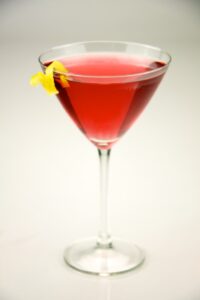
The Cosmopolitan ruled the 1990s and early 2000s thanks to Sex and the City, then became almost uncool by association. But in 2026, it’s back — and this time, serious bartenders are making it properly, with fresh cranberry juice, quality citrus vodka, Cointreau rather than cheap triple sec, and freshly squeezed lime.
The result is a beautifully balanced, genuinely delicious cocktail that deserved better than its pop culture stigma. Martini variations are dominating the global cocktail scene in 2026, and the Cosmopolitan is benefiting enormously from that wave.
How to make it:
- 45ml citrus vodka (Absolut Citron)
- 15ml Cointreau
- 30ml fresh cranberry juice (not syrup)
- 15ml fresh lime juice
- Shake hard with ice. Double strain into a chilled martini glass. Garnish with a flamed orange peel.
What’s Trending in 2026?
Martini mania: Vodka Martini, Dirty Martini, and Espresso Martini are all surging. The Martini as a format — spirit, vermouth (or not), something interesting — is having its biggest moment in decades.
Aperitivo culture: Negroni, Aperol Spritz, Americano, and Campari-based drinks are growing globally as drinkers discover Italian aperitivo culture’s combination of beautiful settings, low-ABV drinks, and early evening indulgence.
Tequila and mezcal everything: Premium tequila is growing faster than almost any other spirit category. Mezcal is infiltrating classic cocktails — Mezcal Negroni, Mezcal Margarita, and Oaxaca Old Fashioned all appeared on global trending lists in 2025.
Low and no-alcohol versions: Every classic on this list now has a popular spirit-free alternative. Non-alcoholic spirits like Lyre’s and Seedlip are making this possible without sacrificing the cocktail experience — a fast-growing trend driven by wellness culture and stricter drink-driving attitudes.
Espresso Martini evolutions: Cold brew versions, plant-based milk variations, flavoured editions (pistachio, chocolate, salted caramel) — the Espresso Martini template is being stretched in every direction.
A Quick South African Cocktail Note
South Africa has a thriving cocktail culture, particularly in Cape Town and Johannesburg, and the global trends above are well represented locally. A few things that make SA cocktail culture unique:
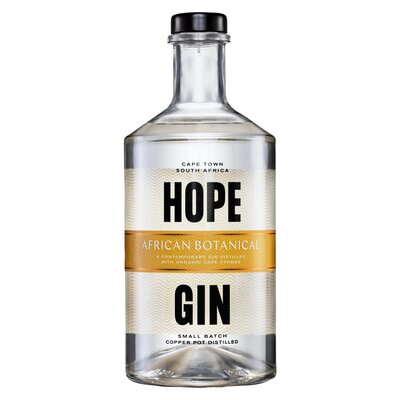
- Local gins like Inverroche, Six Dogs, and Hope on Hopkins are being used to make world-class local Negronis and G&Ts
- Bain’s Cape Mountain Whisky makes an exceptional Old Fashioned
- Cognac cocktails — Hennessy and Rémy Martin mixed long or in Sidecars — are deeply embedded in South African club culture in a way that differs from most global markets
- The Espresso Martini has gone fully mainstream in SA, driven by the country’s exceptional specialty coffee scene in Cape Town and Johannesburg
FAQs
What is the most popular cocktail in the world? According to Drinks International’s annual survey of 100 of the world’s best bars, the Negroni has held the number one position for four consecutive years. By overall consumer volume, the Margarita remains the most ordered cocktail globally.
What is the most popular cocktail in South Africa? The Espresso Martini has become the dominant cocktail at South African bars and restaurants in recent years, alongside the classic G&T and Negroni.
What is the easiest classic cocktail to make at home? The Aperol Spritz — three ingredients, no shaking required, almost impossible to get wrong. The Negroni is a close second: three equal parts, stir over ice. Both are outstanding.
What cocktail is best for someone who doesn’t like alcohol? The mocktail versions of the Mojito and Aperol Spritz (using non-alcoholic spirits) are widely available and genuinely delicious. Seedlip Garden with tonic is also an excellent non-alcoholic G&T alternative.
Which cocktail is best for a South African braai? The Mojito (refreshing and mint-forward on a hot day), the Aperol Spritz (great for afternoon grazing), or simply a classic Gin & Tonic with a premium SA craft gin. All three work beautifully in the braai setting.
The Bottom Line
The world’s most popular cocktails are popular for a reason — they achieve a balance, elegance, and repeatability that less celebrated drinks rarely manage. Whether you’re a Negroni loyalist, an Espresso Martini devotee, or a classic Daiquiri purist, these are the drinks that define global cocktail culture in 2026.
And the best part? All of them can be made at home, most with bottles you probably already have on your shelf.
Drink responsibly. 18+. Not for sale to persons under the age of 18.
For more drink guides, reviews, and lekker beverage content, visit allthingsbeverages.co.za