
By All Things Bev | allthingsbeverages.co.za
Johnnie Walker is the world’s best-selling Scotch whisky by a significant margin — outselling its nearest competitor, Ballantine’s, by more than two to one. On any given evening in South Africa, from Sandton rooftop bars to Soweto taverns, somebody is pouring a JW. It’s that ubiquitous.
But with labels spanning Red, Black, Double Black, Black Cask, Green, Gold, and Blue — plus limited editions that seem to multiply every year — the full range can be genuinely confusing. What’s actually different between them? Is Blue Label worth the price? And which one should you actually buy?
This is your complete guide to every core Johnnie Walker label, what’s inside each bottle, how they taste, and what to spend your rands on.
A brief history: the man in the striding hat
John Walker opened a grocery store in Kilmarnock, Scotland, in 1820, aged 15 — financed by the sale of his late father’s farm. By 1825, records show him selling wine, spirits, and Islay whisky alongside Jamaican spices and teas. He noticed that whiskies were inconsistent and often harsh, and began blending them to produce something more consistent and palatable.
His son Alexander took the business further — introducing the iconic square bottle in 1860 (to reduce breakage during transport and allow more bottles per crate), and the famous 24-degree diagonal label in 1867, designed to allow larger text on the limited bottle space. When Black Label launched in 1909 as a 12-year-old expression, it established the brand’s global status.
Today Johnnie Walker is owned by Diageo and sold in over 180 countries. The Striding Man — the iconic top-hatted figure on every label — has been the brand’s symbol since 1908.
In South Africa, Johnnie Walker is one of the most counterfeited spirit brands on the market — so if you’re buying, always check your bottle from a reputable, licensed retailer. (Read our full guide on spotting fake Johnnie Walker on the blog.)
The Core Johnnie Walker Range — Every Label Compared
Red Label — The Pioneer Blend
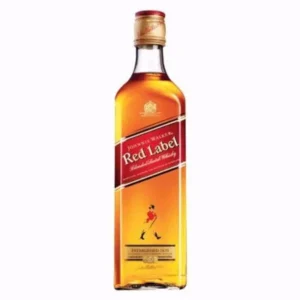
Age statement: No age statement (NAS) ABV: 40% Style: Light blended Scotch SA price range: R259.99 – R289.00 (750ml) Best for: Cocktails, mixing, entry point
Red Label is where most people’s Johnnie Walker journey begins — and where it often stays, because it’s the best-selling Scotch whisky on the planet. It’s a blend of around 35 grain and malt whiskies, designed for mixing rather than sipping neat.
On the nose, Red Label opens with cereal grain sweetness, light smoke, and a citrus lift. On the palate it’s spirited and punchy — slightly sharp at full strength, with notes of vanilla, pepper, and a background whisper of peat. The finish is relatively short and warm.
Red Label’s strength is its versatility as a mixer. In a whisky and cola, a highball, or a classic Scotch and ginger, it performs well. It was designed for the bar environment, not the tasting room, and judging it against more expensive JW expressions for sipping is the wrong comparison.
Verdict: Don’t sip it neat. Mix it freely, and don’t let anyone tell you that’s not a legitimate way to drink whisky.
Black Label — The Benchmark
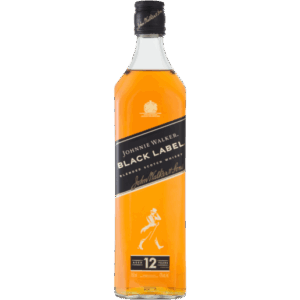
Age statement: 12 Years Old ABV: 40% Style: Classic blended Scotch SA price range: R399 – R479.99 (750ml) Best for: Everyday sipping, the perfect starting point
Black Label is mathematically underpriced for what it delivers. It racked up 34 points across the four major blind-tasted competitions between 2020 and 2026, anchored by a San Francisco World Spirits Competition Double Gold and six standard Golds spread across SFWSC, IWSC, and ISC judging panels — which is elite-tier consensus from judges who had no idea what they were drinking.
The liquid is a blend of around 40 whiskies, including malts from Cardhu (sweet, fruity), Clynelish (waxy, coastal), Caol Ila (peated, smoky), and Glenkinchie (light, floral), combined with grain whisky for smoothness. The balance between these contrasting characters is where Black Label earns its reputation.
On the nose it delivers gentle smoke, dried fruit, vanilla, toffee, and hints of citrus zest. The palate is balanced — that inviting equilibrium between sweetness and a soft peat undercurrent that makes it immediately approachable. The finish is long and warming, with lingering spice and oak.
Black Label is the best value expression in the Johnnie Walker range for what’s in the bottle relative to what you pay — a view shared consistently by independent whisky writers who have no commercial interest in telling you that.
Verdict: The one to buy. Whether you’re new to Scotch or a seasoned sipper, Black Label is the Johnnie Walker expression that rewards you most for the rand.
Double Black — The Smoky Sibling
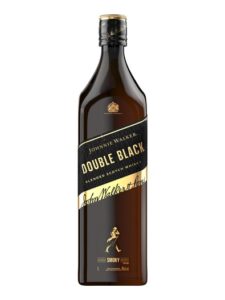
Age statement: No age statement ABV: 40% Style: Smoky blended Scotch SA price range: R589.00 – R640.00 (750ml) Best for: Peat lovers, step up from Black Label
Released in 2011, master blender Jim Beveridge created Double Black as a bolder interpretation of the classic Black Label. The goal wasn’t to reinvent the whisky but to amplify the characteristics that many drinkers already loved. To achieve this, Double Black incorporates a greater proportion of smoky West Coast and Island malts — including more Caol Ila and Talisker — and is matured in heavily charred oak casks.
The result is a darker, richer, and more intense whisky that retains Black Label’s DNA while offering a considerably more robust flavour profile. Even before tasting, the deeper colour in the glass hints at the richer experience ahead.
Where Black Label is balanced and approachable, Double Black is more assertive — bolder smoke, more char, richer fruit. The peat note is upfront rather than background. It’s excellent for drinkers who want more intensity without moving to a full single malt Islay whisky like Laphroaig or Ardbeg.
Verdict: The natural next step if you love Black Label but want more smoke and intensity. Worth the small price premium over Black.
Black Cask — The Bourbon Crossover (New 2026)
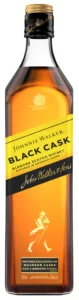
Age statement: No age statement ABV: 43% Style: Bourbon-influenced blended Scotch SA price range: Not yet widely available in SA — US SRP $34.99 (approx. R650) Best for: Bourbon drinkers exploring Scotch
Johnnie Walker launched Black Cask in February 2026 as a new permanent expression aged entirely in American white oak ex-bourbon barrels — designed to bridge the flavour profiles of American whiskey and Scotch whisky within a single bottle. Master Blender Dr. Emma Walker led the development.
Black Cask starts from a similar array of malts and grain whiskies as Black Label, but the heart of the recipe is a grain whisky from Cameronbridge Distillery partly distilled from corn, selected for its soft bourbon-like sweetness, alongside malts from Glen Elgin and Roseisle, both chosen for their orchard fruit flavours.
The result is noticeably sweeter and more vanilla-forward than any other JW expression — creamy vanilla, rich caramel, gentle baking spice, and smooth oak warmth, with the smoke dialled right down. It’s higher in ABV than Black Label at 43%, which helps the flavour development.
Independent reviewers have been broadly positive — the palate is fruit-forward with caramel-soaked apples and buttery shortbread notes — though some note that it still carries a subtle char that may not fully satisfy dedicated bourbon fans.
Currently a US-exclusive permanent release but expected to roll out internationally. Worth watching for on SA specialist shelves later in 2026.
Verdict: Genuinely interesting addition to the range. If you love bourbon more than Scotch, this is your gateway. If you’re already a Black Label devotee, it’s a fun alternative but not a replacement.
Green Label — The Hidden Gem
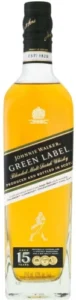
Age statement: 15 Years Old ABV: 43% Style: Blended malt Scotch (no grain whisky) SA price range: R1,069 – R1,150 (750ml) Best for: Serious whisky drinkers, the best-kept secret in the range
Green Label is the only blended malt in the Johnnie Walker core range — meaning it contains no grain whisky at all, only single malt whiskies from multiple distilleries. This is a fundamentally different category from the other labels, which are all blended Scotch (malt plus grain).
Green Label was re-launched in 2016 having originally appeared in 1997, and is a hearty, malty dram that includes Talisker, Linkwood, Cragganmore, and Caol Ila in the blend. The 15-year age statement means every whisky in the bottle has been maturing for at least 15 years — which at its price point is remarkable value.
The flavour profile is significantly more complex than any of the Black expressions — herbal, grassy, with coastal smoke from Talisker, fruit richness from Cragganmore, and a maritime complexity from Caol Ila. It has texture and weight that blended Scotch can’t achieve. The finish is long and layered.
Green Label consistently scores as the best value expression in the Johnnie Walker range among serious whisky writers. It’s the one that surprises people most.
Verdict: The best Johnnie Walker you’re not drinking. Significantly better quality than its position in the range suggests, and outstanding value at its price point. If you’re ready to step up from Black Label, go here before Gold or Blue.
Gold Label Reserve — The Celebration Bottle
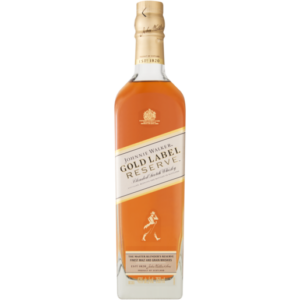
Age statement: No age statement (but contains whiskies aged a minimum of 18 years) ABV: 40% Style: Rich blended Scotch SA price range: R750 – R850 (750ml) Best for: Special occasions, gifting, smooth sipping
Gold Label Reserve was originally conceived to celebrate the 200th anniversary of John Walker’s birth. It uses whiskies aged a minimum of 18 years, sourced from across Scotland, and the focus is on richness, smoothness, and luxury rather than smoke or complexity.
The nose is honeyed and inviting — vanilla, dried fruit, light oak. On the palate: rich chocolate, dried fruit, a hint of smoke, honey, and a touch of spice. The finish is long, warm, and elegant. It’s deliberately accessible — not challenging, not polarising, just consistently pleasant and undeniably refined.
Gold Label positions itself as the brand’s celebration expression — the bottle you open for birthdays, anniversaries, and promotions. In SA, it sits at a price point that makes it genuinely competitive with single malts.
Verdict: A beautiful, reliable, smooth Scotch that never disappoints. Slightly less complexity than Green Label at a similar or higher price, but for the occasion drinker who wants pure luxury over intellectual challenge, it’s excellent.
Blue Label — The Crown Jewel
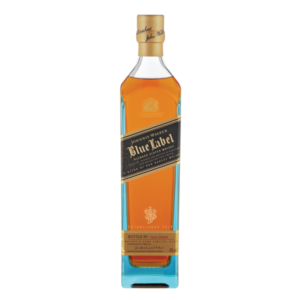
Age statement: No age statement ABV: 40% Style: Ultra-premium blended Scotch SA price range: R3,299 – R3,499 (750ml) Best for: Gifting, collecting, special occasions, showing off
Blue Label is the pinnacle of the Johnnie Walker range and one of the world’s most recognisable luxury whiskies. Blue Label is said to contain some very exclusive whisky, even some from distilleries that have since closed — so-called “ghost distilleries” whose remaining stocks are among the rarest whisky in the world.
Only 1 in 10,000 casks from Diageo’s unparalleled reserves of ageing Scotch are selected to craft the exclusive depth of flavour that defines Blue Label — a marketing claim, yes, but one that reflects the genuine curation involved in each blend.
The liquid is extraordinary. Dark chocolate, hazelnut, and caramel on the nose; delicate honey, smoked cinnamon bark, and vanilla on the palate; a finish that seems to keep going. It’s silky smooth in a way that no other JW expression quite replicates — the grain whiskies used are exceptionally old and refined, eliminating any sharpness entirely.
Blue Label won Gold at the 2024 San Francisco World Spirits Competition. It’s genuinely excellent whisky.
The honest question: Is it worth R3,299 – R3,499 a bottle? As a gift, absolutely — the presentation is stunning and the name is universally recognised. As a drinking experience, the price gap between Blue and Green Label is enormous relative to the quality gap. Green Label at R1,000 delivers a significantly more intellectually interesting whisky per rand. Blue Label delivers prestige, luxury, and an experience you’ll remember — but those things have a price that may or may not align with what’s in the glass.
Verdict: The finest Johnnie Walker experience. Buy it as a gift, to celebrate something significant, or to share with someone who will appreciate it. Don’t buy it as your everyday sipper — Green Label gives you far better value for drinking pleasure.
The Full Range at a Glance
| Label | Age | ABV | SA Price (750ml) | Best for |
|---|---|---|---|---|
| Red Label | NAS | 40% | R259.99 –R289 | Mixing & cocktails |
| Black Label | 12 Years | 40% | R399 – R479.99 | Everyday sipping |
| Double Black | NAS | 40% | R589.00 –R640 | Peat & smoke lovers |
| Black Cask | NAS | 43% | ~R650 (limited SA availability) | Bourbon crossover |
| Green Label | 15 Years | 43% | R1,069 – R1,150 | Serious whisky lovers |
| Gold Label Reserve | 18 Years+ | 40% | R750 – R850 | Celebrations & gifting |
| Blue Label | NAS | 40% | R3,299 – R3,499 | Luxury gifting & occasions |
Prices are approximate and vary between retailers. Always verify current prices at your preferred store.
Which Johnnie Walker Should You Buy?
For beginners: Start with Black Label. It’s the brand’s most complete, balanced expression and the best introduction to blended Scotch whisky.
For mixing and cocktails: Red Label — cheaper, punchy, designed for it.
For peat and smoke fans: Double Black, which delivers all of Black Label’s DNA with considerably more intensity.
For bourbon drinkers: Black Cask (once it reaches SA shelves) — sweeter, rounder, minimal smoke.
For the best value in the whole range: Green Label 15 Year Old. Hands down. It’s a blended malt at an accessible price, and it comfortably outperforms everything below Blue Label for complexity and character.
For a gift or special occasion: Gold Label Reserve (safe, elegant, universally loved) or Blue Label (the showstopper, full stop).
FAQs
What is the most popular Johnnie Walker in South Africa? Black Label is the most widely consumed premium expression, with Red Label dominating the mixing and on-trade market. Blue Label is the aspirational choice for gifting and special occasions.
Is Johnnie Walker Blue Label worth the price? As a gift or special occasion bottle, yes — the presentation, prestige, and liquid quality are all exceptional. As everyday drinking value, no — Green Label 15 Year Old delivers significantly more interesting whisky per rand.
What is the difference between Johnnie Walker Black and Double Black? Both use similar base whiskies, but Double Black incorporates more smoky Island and West Coast malts and is matured in heavily charred casks — producing a darker, richer, more intensely peated version of Black Label.
What is Johnnie Walker Green Label? The only blended malt in the core range — meaning it contains only single malt whiskies (no grain whisky), all aged at least 15 years. It includes malts from Talisker, Linkwood, Cragganmore, and Caol Ila. It’s the range’s best-kept secret.
What is Johnnie Walker Black Cask? A brand new 2026 expression designed to appeal to bourbon drinkers — aged exclusively in American white oak ex-bourbon barrels, producing a sweeter, vanilla-forward, low-smoke profile. Currently a US-exclusive release but expected to roll out internationally.
Where can I buy Johnnie Walker in South Africa? All major licensed retailers — Checkers Liquorshop, Tops at SPAR, Pick n Pay Liquor, Makro, and Norman Goodfellows for the premium and rarer expressions. Always buy from a licensed, reputable retailer to avoid counterfeit products.
The Bottom Line
Johnnie Walker built its empire on consistency, craft, and the genius of blending. From Red Label’s reliable mixing base to Blue Label’s extraordinary luxury experience, every expression in the range has a legitimate reason to exist — and a right occasion to be opened.
For most South Africans, the sweet spot lives between Black and Green Label: genuinely world-class Scotch whisky, at prices that make it an accessible indulgence rather than a once-a-year luxury.
Keep walking. 🥃
Drink responsibly. 18+. Not for sale to persons under the age of 18.
For more whisky guides and South African beverage content, visit allthingsbeverages.co.za