
Savanna cider is one of South Africa’s most popular alcoholic drinks — crisp, refreshing, and almost always at the top of summer season sales. But with that popularity comes a problem: counterfeit or fake Savanna bottles on the market.
Since fake alcohol can be dangerous, and because Savanna sells in massive volumes locally, it’s important to know how to tell a real bottle from a fake one.
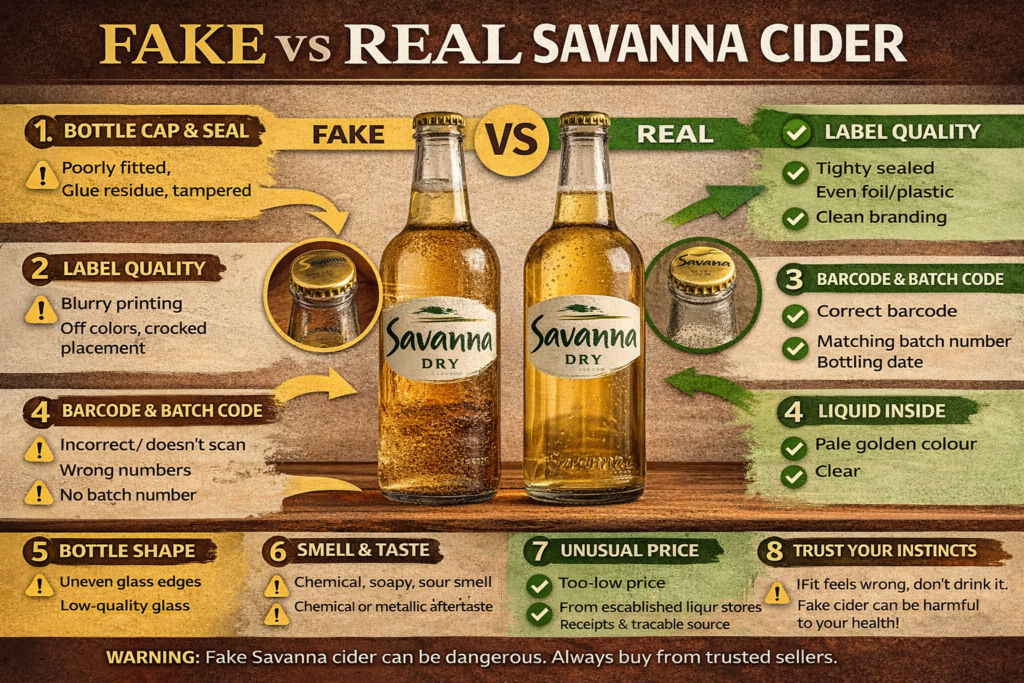
Here’s your step-by-step guide.
1. Buy From Trusted Sellers
The first line of defence is where you buy your drink:
Good places to buy include:
- Established bottle stores
- Major retailers (e.g., Makro, Pick n Pay, Checkers Liquor)
- Licensed taverns and bars
- Reputable online retailers
Avoid:
- Street vendors without proper permits
- WhatsApp or social media tyre-kick sellers
- Informal market stalls without visible licensing
If the price is too good to be true, it probably is.
2. Inspect the Bottle Cap & Seal
Real Savanna bottles have:
- A tight, professionally sealed cap
- Even foil or plastic around the neck
- No glue residue or tampering marks
- Correct branding on the cap manufacturer stamp
Red flags include:
- Loose or poorly fitted caps
- Cracks or glue showing around the seal
- Creases indicating the seal was opened before
3. Look at the Label Quality
Savanna labels are produced with high quality:
- Crisp printing
- Clean colours
- No uneven edges
- Correct brand logo and fonts
- QR codes and barcodes that scan
Fake bottle signs:
- Blurry printing
- Discolouration
- Misspelled words
- Labels that look slightly crooked
Often, fake labels are stuck on by hand and may show bubbles under the paper.
4. Check the Barcode and Batch Codes
Every genuine bottle has a:
- Barcode
- Batch number
- Bottling date and sometimes a lot code
Use a barcode scanner app on your phone — codes should:
- Match the Savanna product
- Not come up as another product
- Not be repeated across many different bottles
If the code brings up another drink or fails to scan correctly, it’s likely fake.
5. Look at the Liquid Inside
Savanna is a clear, pale golden colour when legitimate.
Watch out for:
Cloudiness
Floating particles
Strange sediments
Unusual colour (too dark, too light)
Fake alcohol often has impurities or colour differences because of cheaper production processes or contamination.
6. Give It a Sniff (Before You Sip)
Real Savanna smells like:
- Apples or fruity esters
- Clean, crisp alcohol
Fake or contaminated cider might smell:
- Chemical or soapy
- Sour, like vinegar
- Like fuel or solvent
If the smell feels off, don’t taste it.
7. Taste Carefully (If You’ve Already Bought It)
Authentic Savanna has a light, refreshing taste with a dry finish.
Signs it might be fake:
- Harsh burning sensation
- Metallic or chemical aftertaste
- Bitter flavours that don’t fit cider
If it tastes wrong, stop drinking immediately — fake alcohol can be harmful to your health.
8. Examine the Bottle Shape & Printing
Savanna has a specific bottle profile:
- Uniform glass thickness
- Printed Savanna logo or label
- Consistent font sizes and spacing
Fake bottles often use cheaper glass and may have:
- Uneven glass edges
- Low-quality printing
- Incorrect logos
9. Be Wary of Bulk Offers
If someone is selling:
- Cases of Savanna at a price far below retail
- “Brand new” stock from someone you don’t know
- Unsealed cartons or loose bottles
There’s a high chance the supply is illegitimate.
Legitimate bulk alcohol is usually sold in sealed boxes with proper documentation.
10. What to Do If You Suspect a Fake Bottle
- Don’t drink it.
- Keep the bottle and label intact.
- Report it to:
- Local police (SAPS)
- Liquor Brand Owners Association (SALBA)
- The store you bought it from
- Take photos and share them with local consumer safety groups.
Reporting fake alcohol not only protects you — it protects your community.
Simple Quick Checklist Before You Buy
- Bought from a licensed seller
- Sealed cap with no signs of tampering
- Sharp and accurate label
- Barcode scans correctly
- Colour and aroma match authentic Savanna
- No suspicious sediment in the bottle
- Price aligns with local retail rates
If even one item fails, put the bottle down.
Final Thoughts
Savanna cider is a local favourite because of its taste, consistency, and availability — but fake versions can be dangerous and disappointing.
By checking the cap, label, liquid, barcode and smell, you can protect yourself from counterfeit alcohol. Always buy from trusted sellers and trust your senses — if something feels off, it probably is.
Stay safe, drink smart