
By All Things Beverages | allthingsbeverages.co.za
Walk into any bottle store, shebeen, braai, or sports bar in South Africa and you’ll find the same familiar faces staring back at you from the fridge. South Africans are serious about their beer — and loyal to it in a way that’s almost tribal.
But the landscape is shifting. The brands that dominated a decade ago are fighting harder for shelf space. Premium imports are gaining ground. A new generation of drinkers is reaching past the mainstream. And the “beyond beer” category — ciders, RTDs, fruit beers — is growing faster than almost anything else.
So where do things stand in 2026? We’ve rounded up the most popular beers in South Africa right now, ranked by market presence, cultural clout, and what’s actually in people’s hands at the braai.
- Quick context: who runs South Africa's beer market?
- The Most Popular Beers in South Africa in 2026
- 1. Carling Black Label — The People's Champion Beer
- 2. Castle Lager — The National Icon
- 3. Castle Lite — The Youth Favourite
- 4. Hansa Pilsener — The Underrated Classic
- 5. Windhoek Draught — The Purity Standard
- 6. Heineken — The Premium Staple
- 7. Corona Extra — The Fast Climber
- 8. Amstel Lager — The Braai Crowd Favourite
- 9. Stella Artois — The Occasion Beer
- 10. Castle Milk Stout — The Dark Horse
- What's Changing in 2026?
- FAQ
- The Bottom Line
Quick context: who runs South Africa’s beer market?
Before we get into the beers, it helps to understand who’s making them.
South African Breweries (SAB), a subsidiary of AB InBev, remains the dominant force with approximately 87% market share — meaning nearly nine out of every ten beers sold in South Africa come from one company. SAB’s portfolio includes Carling Black Label, Castle Lager, Castle Lite, Hansa Pilsener, Flying Fish, and more.
Their main competitor is Heineken Beverages, which has been investing heavily in SA and controls brands like Heineken, Amstel, and — following their major acquisition — several former Distell products.
Beer holds the title as the most favoured alcoholic drink in South Africa, with leading brands such as Castle Lager, Carling Black Label, and Heineken dominating the market.
Beer remains the most popular alcoholic beverage in South Africa, accounting for 56 percent of the alcohol consumed in the country. Wine and spirits each rank second at 18 percent each.
Right. Now let’s get into the beers.
The Most Popular Beers in South Africa in 2026
1. Carling Black Label — The People’s Champion Beer
Brewed by: SAB (AB InBev) Style: Premium lager ABV: 5.5% Also known as: Zamalek, Quickstart, Silvertop
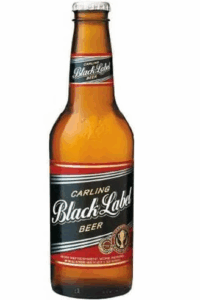
If there’s one beer that defines South African drinking culture, it’s this one. The most popular and valuable brand is Carling Black Label, which is the most awarded beer in the country with 20 prestigious international beer awards to its name.
A decade ago, Castle Lager reigned supreme — but by 2023, Carling had dethroned Castle Lager, claiming the top spot. And it hasn’t looked back.
Black Label’s appeal cuts across income groups, age brackets, and provinces in a way no other beer manages. It’s the beer of the braai, the tavern, the shebeen, the after-work debrief, and the Sunday afternoon. Carling Black Label has been quenching South Africans’ thirst for over 40 years and has built a reputation as one of the most awarded beers in the world.
Hold it up to the light and you’ll see its unmistakable golden clarity. On the palate it delivers bold, earthy flavour notes with a spicy hoppiness from lightly kilned malted barley, and subtle fruity notes in the aroma. It’s got more character than your average lager — which is probably why it’s so dominant.
Best enjoyed: Ice cold from a 750ml returnable bottle at a braai. There is no other way.
2. Castle Lager — The National Icon
Brewed by: SAB (AB InBev) Style: Pale lager ABV: 5%
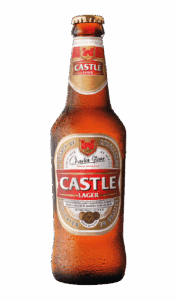
Castle Lager is widely considered the “national beer” of South Africa due to its widespread popularity and production within the country. Its origins can be traced to the Johannesburg gold rush of 1886, when Castle Brewery founder Charles Glass began selling beer to the miners — and by 1889, a local newspaper had already declared it “a phenomenal success.”
Castle Lager is now brewed in nine countries and is available in over 40 countries worldwide. That’s quite the glow-up from a Joburg goldfields tavern.
It may have ceded the number one sales spot to Black Label, but Castle’s cultural footprint is arguably deeper. It sponsors the national football team. It’s the beer associated with heritage and nostalgia. Older South Africans have a relationship with Castle that borders on sentimental.
The beer itself is clean and easy-drinking — medium-bodied, with a light malt backbone and a crisp, slightly bitter finish. Not flashy. Not trying to be. Just reliably itself, every single time.
Best enjoyed: Ice cold in a pint glass watching the game.
3. Castle Lite — The Youth Favourite
Brewed by: SAB (AB InBev) Style: Light lager ABV: 4%
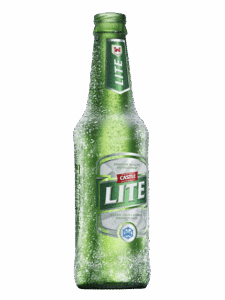
For the younger generation, Castle Lite has become the most popular South African beer. This low-kilojoule, low-carb beer is crisp with a slight bitterness and a mild hoppy aroma.
Castle Lite has been masterfully positioned as a lifestyle brand rather than just a beer — all sleek cans, music sponsorships, and “extra cold” marketing. It’s the beer you’ll see in the hands of young professionals at rooftop bars in Sandton and Camps Bay, at music festivals, and at house parties where someone bought the cooler box in.
At 4% ABV it’s more sessionable than its siblings, which doesn’t hurt its popularity among drinkers who want to go the distance at a long event. The light, crisp flavour profile with minimal bitterness makes it very easy-drinking — sometimes criticised for being too easy, but that’s clearly not slowing it down.
Best enjoyed: Extra cold, straight from the can, at a summer music festival.
4. Hansa Pilsener — The Underrated Classic
Brewed by: SAB (AB InBev) Style: German-style pilsener ABV: 4.5%

Hansa doesn’t always get the headlines, but it consistently holds its position as one of the most-ordered beers on tap in South African bars and restaurants. Hansa Pilsener is third on the national brand list, sitting comfortably behind Black Label and Castle.
It’s a proper pilsener in the European tradition — more hop-forward and slightly more bitter than Castle Lager, with a clean, crisp finish and light golden colour. Beer drinkers who want a bit more flavour than a standard lager but aren’t ready to go full craft tend to find their home with Hansa.
It’s also the draught of choice at a huge number of South African pubs — and there’s an argument that Hansa Pilsener on tap is one of the most satisfying beer experiences in the country when it’s properly cold and well-poured.
Best enjoyed: On tap at your local, alongside a plate of boerewors rolls.
5. Windhoek Draught — The Purity Standard
Brewed by: Namibia Breweries Limited (NBL) Style: German-style lager ABV: 4%
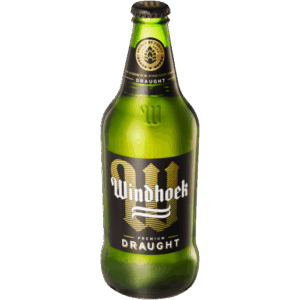
Windhoek isn’t South African, strictly speaking — it comes from Namibia — but it’s been a fixture in SA bottle stores and bars for decades, and its reputation here rivals any local brand.
Crafted in line with the ancient German Purity Law of 1516, it’s made using just three natural ingredients: barley malt, hops, and water — nothing else. No additives. No preservatives.
For nearly 100 years, this strict adherence to purity has produced extraordinarily fresh and deliciously smooth beer without artificial additives, adjuncts, or unnecessary ingredients — making it purer and more authentic than many modern lagers that use rice, corn, or other adjuncts.
The result is a bright golden lager with light malt notes, gentle bitterness, and a dry, clean finish. It’s the beer people reach for when they want something a step up from the mainstream without venturing into import territory. And because of its purity credentials, it’s become something of a badge of discernment in the SA beer scene.
Best enjoyed: Ice cold from the distinctive green bottle, ideally somewhere with a sunset view.
6. Heineken — The Premium Staple
Brewed by: Heineken Beverages SA Style: International pale lager ABV: 5%
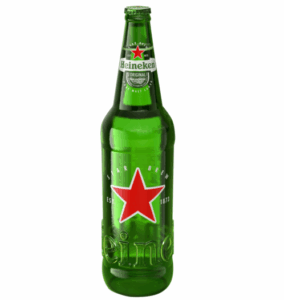
Heineken’s dominance globally is reflected locally — it’s the go-to premium choice at most restaurants, bars, and events. It occupies a slightly elevated space from the SAB mainstream beers, which makes it feel like a small upgrade without breaking the bank.
Global brands like Heineken, Corona, and Budweiser are targeting the aspirational middle class, and urbanisation and rising disposable incomes are shifting consumers toward these “status” products.
The familiar pale lager character — slightly bitter, light and refreshing — translates well to South African tastes and the SA heat. Heineken’s marketing investment in SA (sports sponsorships, music events) keeps it firmly in the cultural conversation.
Best enjoyed: In a tall glass at a sports bar, watching the rugby or football.
7. Corona Extra — The Fast Climber
Brewed by: SAB (AB InBev) Style: Mexican pale lager ABV: 4.5%
Corona has had a remarkable few years in South Africa. Corona and Stella Artois volumes were up in the low-teens — 10 to 14 percent — in early 2025, with both brands gaining strong traction in the local market.
SAB has achieved robust growth within imported premium lager in 2024, particularly through the success of brands such as Corona and Stella Artois, which appeal to higher income groups.
Corona’s positioning as a beach, summer, and outdoor lifestyle beer maps perfectly onto South African culture. The lime-wedge ritual (serve it with a wedge of lime shoved into the bottle neck) gives it a point of difference at any gathering. It’s become the premium lager of choice for younger, urban drinkers who associate it with sun, warmth, and a good time — which describes most South African days.
Best enjoyed: With a fat wedge of lime, ice cold, at a pool party or beach braai.
8. Amstel Lager — The Braai Crowd Favourite
Brewed by: Heineken Beverages SA Style: Dutch pale lager ABV: 5%
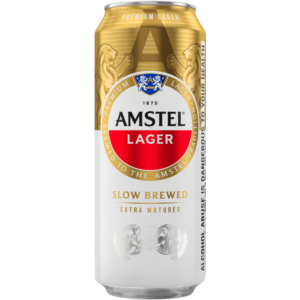
Amstel sits in a comfortable middle ground between everyday mainstream and accessible premium. It has a loyal following particularly among older drinkers and in Gauteng, where it’s often neck-and-neck with Black Label for bar orders.
It’s a slightly fuller-bodied lager than Castle, with more malt character and a gentler bitterness — approachable enough to drink all afternoon but with enough flavour to feel like you’re drinking something decent. Amstel 750ml dumpies at the braai are a South African institution.
Best enjoyed: In the big returnable bottle, passed around at a Sunday family braai.
9. Stella Artois — The Occasion Beer
Brewed by: SAB (AB InBev) Style: Belgian-style pilsener ABV: 5%
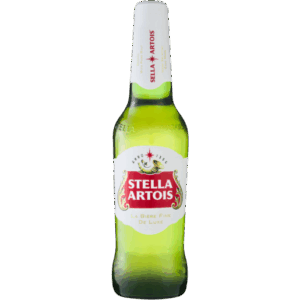
Stella Artois has long had a reputation as an occasion beer — the bottle you buy when you want to impress someone or mark a moment. And its growth in SA is backing that positioning up. AB InBev reported double-digit top and bottom-line growth in South Africa in 2024, with Corona and Stella Artois leading their premium performance.
The beer is a well-made Belgian pilsener — slightly bitter, clean, and well-balanced. But in South Africa, a significant part of its appeal is cultural: the chalice glass, the fancy packaging, the European heritage story. Whether you think that’s marketing fluff or perfectly valid doesn’t matter — it’s working.
Best enjoyed: Served in the signature chalice glass, somewhere that feels like a special occasion.
10. Castle Milk Stout — The Dark Horse
Brewed by: SAB (AB InBev) Style: Milk stout / sweet stout ABV: 6%
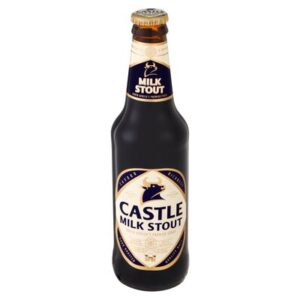
A wildcard on this list — and deliberately so, because Castle Milk Stout deserves more recognition than it usually gets. While lagers dominate the SA beer market, Milk Stout holds a dedicated and deeply loyal following that cuts across demographics in a uniquely South African way.
Castle Milk Stout is Africa’s premier stout, made using dark roasted malt to extract a full-flavoured brew, complemented by a creamy, smooth head that comes from a special yeast.
It’s dark, smooth, roasty, and slightly sweet — with coffee, chocolate, and caramel notes that make it completely different from everything else on this list. In townships and traditional communities especially, Milk Stout has a cultural significance and a loyalty that the lager brands can only dream about.
If you haven’t explored Milk Stout, this is your sign.
Best enjoyed: Slightly cool (not ice cold — cold kills the flavour), paired with a spicy meal or just on its own.
What’s Changing in 2026?
The South African beer market is evolving fast. A few trends worth noting:
Premiumisation is real. More South African drinkers — particularly in urban areas — are trading up from mainstream lagers to premium imports and even craft beers. The SA beer market was valued at approximately USD 3.60 billion in 2024 and is projected to reach USD 5.31 billion by 2030. A significant portion of that growth is coming from the premium end.
“Beyond beer” is booming. SAB CEO Richard Rivett-Carnac noted that the beyond beer category — RTDs, ciders, and flavoured beverages — is growing faster than beer, spirits, and wine. “Beyond beer is taking share from other alcoholic categories,” he said. Brands like Flying Fish and Brutal Fruit are pulling drinkers who might previously have bought a mainstream lager.
Alcohol-free is no longer embarrassing. Alcohol-free versions of popular beers — like Heineken 0.0 and Castle Free — are catering to wellness trends and stricter drink-driving enforcement, with major brewers increasing marketing spend on “zero” versions to capture daytime consumption occasions.
Craft is finding its audience. Small independent breweries and craft beers have witnessed a surge in popularity, with Flying Fish climbing to the third most popular brand — surpassing established names like Amstel, Castle Lager, and Budweiser. Cape Town in particular has a thriving craft scene, and Joburg is catching up fast.
FAQ
What is the number one selling beer in South Africa? Carling Black Label — known affectionately as Zamalek or Quickstart — is currently South Africa’s top-selling beer by volume and brand value.
What is the most popular beer at braais? Black Label takes the crown here too, though Castle Lager, Amstel, and Windhoek all have fierce braai followings depending on who you ask.
What beer do young South Africans drink? Castle Lite dominates the youth market, followed by Corona and Heineken among urban drinkers who lean toward premium options.
Are there good South African craft beers? Absolutely — Cape Town especially has a world-class craft scene. Look out for Drifter Brewing, Devil’s Peak, Newlands Spring, and CBC (Cape Brewing Company) for starters.
What is the cheapest popular beer in SA? Lion Lager and Hansa Pilsener are among the most affordable mainstream options. Carling Black Label in the returnable 750ml bottle is also exceptional value for money given its quality.
The Bottom Line
South Africa’s beer scene in 2026 is more interesting than it’s ever been — a mainstream market that’s fiercely competitive, a premium segment that’s growing rapidly, and a craft scene that’s producing genuinely world-class brews.
Whether you’re a Black Label loyalist, a Windhoek purist, a Castle Milk Stout aficionado, or someone who’s been quietly working through the craft tap list — there’s never been a better time to be a beer drinker in this country.
Cheers to that. 🍺
Drink responsibly. 18+. Not for sale to persons under the age of 18.
For more South African beverage guides, reviews, and lekker content, visit allthingsbeverages.co.za