
Veuve Clicquot: The Widow Who Built an Empire and Made Champagne the World’s Celebration Drink
When a 27-year-old widow, orphaned of her dreams by tragedy in Napoleonic France, takes control of a fledgling champagne house and transforms it into a global luxury empire synonymous with celebration and success, you’re witnessing history being written in bubbles. Veuve Clicquot – named after Barbe-Nicole Ponsardin, the extraordinary woman widowed in 1805 who revolutionized champagne production, created the first vintage champagne in 1810, invented the riddling table that made mass production of fine bubbles possible, and built one of the world’s largest champagne houses – stands as a monument to female entrepreneurship, uncompromising vision, and innovative thinking. Produced in Reims, France, under LVMH ownership since 1987, Veuve Clicquot’s iconic Yellow Label flagship champagne blends Pinot Noir (50-55% for structure), Chardonnay (30% for freshness), and Meunier (20% for fruitiness) from 50-60 different vineyard sites, aged minimum 3 years on lees at 12.5% ABV, delivering brioche, vanilla, white peach, and subtle citrus with silky texture. Available in South Africa at R549-R850 per 750ml (Norman Goodfellows R549 best price, Blouberg R749.99, Mothercity, Checkers, WhiskyBrother), Veuve Clicquot isn’t just champagne – it’s 250 years of female power, innovation, and the celebration of life itself. Here’s everything you need to know about the widow who created modern champagne.
History:
The Ponsardin Privilege: Wealth, Education, Ambition (1777-1798)
Barbe-Nicole Ponsardin was born December 16, 1777, in Reims, France – not to poverty or struggle, but to privilege that seemed destined for conventional contentment. Her father was a wealthy textile industrialist and influential banker in Reims, one of the largest cities in France’s Champagne region. In the pre-Revolutionary world, Barbe-Nicole received education rare for women – training in languages, business mathematics, and commercial principles alongside the social graces expected of affluent daughters.
This education proved transformational. Unlike her female peers destined for drawing rooms and needlework, Barbe-Nicole developed sharp business acumen, analytical thinking, and appetite for commerce. She watched her father navigate wealth-building, observed market dynamics, and learned that success required bold thinking.
Marriage and Widowhood: Fate’s Cruel Hand (1798-1805)
At age 21, Barbe-Nicole married François Clicquot, whose family was involved in banking, textiles, and champagne production. The marriage appeared advantageous – linking two prosperous Reims families, combining resources, and presumably ensuring comfortable fortune.
François Clicquot died in 1805, just seven years after their marriage, leaving Barbe-Nicole a widow at 27 with a three-year-old daughter to support. In the rigid, male-dominated world of early 19th-century France, this tragedy appeared catastrophic – a woman alone, without male protection or guidance, facing destitution.
Yet paradoxically, widowhood became her liberation. Under the Napoleonic Code, women were denied civil and political rights, prohibited from working, voting, earning money, or entering schools and universities without the consent of their husband or father. Widows were the only women in French society free and allowed to run their own business.
Barbe-Nicole seized this opportunity with ruthless determination. She was determined “not to rely on anyone.”
Taking Control: The Widow Becomes the Widow (1805)
At age 27, the Veuve Clicquot Ponsardin convinced her father-in-law to let her run the family business. This was audacious – a woman managing a commercial enterprise, making business decisions, negotiating with suppliers, competing against established male-led champagne houses. Contemporary observers likely viewed her appointment as temporary – a placeholder until a capable man could assume control.
They were catastrophically wrong.
Within months of taking control, Barbe-Nicole implemented aggressive expansion. One month after François Clicquot’s funeral, 110,000 bottles of champagne had been shipped during the course of 1805, nearly double the preceding year, thanks to business trips.
This wasn’t luck – it was calculated strategy. While competitors focused on local Reims trade and European elites, Barbe-Nicole targeted international markets, investing in export infrastructure and building relationships with merchants across Europe and beyond.
The Riddling Table: Innovation That Changed Everything (1810s)
Champagne production in the early 1800s faced a critical problem: sediment. During the méthode champenoise (secondary fermentation in bottle creating bubbles), yeast cells remained trapped inside bottles. Removing them required labor-intensive manual work – turning bottles slowly upside-down to gather sediment at the cork, then carefully popping the cork to expel sediment while preserving precious bubbles.
Under the suggestions of de Muller, Widow Clicquot improved this method by creating a table with diagonal hoes allowing for progressive rotation and inclination of the upside down bottles, allowing for a smooth collection of the yeast in the necks. Now the Clicquot champagne was clear!
The riddling table – also called a “pupitre” – was genius because it enabled scaling. What previously took skilled workers weeks could now be systematized, accelerating production dramatically. The invention of riddling allows the mass-production of an artisanal and luxury product, just not at the tiny quantities that they were dealing with before.
This innovation transformed champagne from exclusive luxury (produced in minuscule quantities for European nobility) into accessible luxury – still premium, but available to growing middle-class consumers with resources.
Creating Vintage Champagne: Innovation Continues (1810)
Driven by an uncompromising vision and an inventive spirit, Madame Clicquot created the first vintage champagne in 1810. This was revolutionary – rather than blending wines from multiple harvests (as contemporaries did for consistency), she declared that exceptional harvest years deserved recognition through single-vintage bottling. Today, vintage champagne is celebrated; then, it was radical and risky.
Yet her conviction proved correct. Vintage champagne became a prestigious category, commanding premium pricing.
Global Expansion and the Yellow Label (1810s-1860s)
While competitors focused on regional markets, Barbe-Nicole built a global distribution network. By the time she died in 1866, Veuve Clicquot was exporting champagne to the far reaches of the world, from Lapland to the United States.
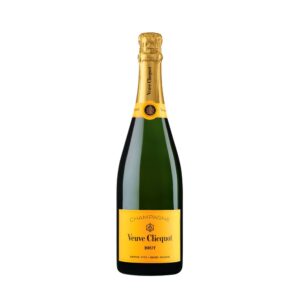
The iconic yellow label emerged as her brand mark – distinctive, memorable, and conveying luxury. In an era before mass advertising, the yellow label became synonymous with quality and success. Champagne drinkers didn’t just ask for “Veuve Clicquot” – they asked for “the yellow label” because it represented the finest available.
Barbe-Nicole’s marketing genius was proto-modern. She understood branding, positioning, and consumer psychology centuries before Harvard Business School. She positioned Veuve Clicquot not as “one of many” champagne houses, but as the champagne for celebration and success.
Legacy: The Widow Who Became Legend (1866-Present)
Madame Clicquot died July 29, 1866, aged 88. By then, she had transformed a small family business into an international powerhouse, fundamentally changed champagne production, and become one of the world’s first truly international businesswomen.
Madame Barbe-Nicole Clicquot-Ponsardin (1777-1866), better known to the world by the name of her champagne, Veuve Clicquot (‘Widow Clicquot’), was one of the greatest entrepreneurs not just of her own but of any age.
Today, Veuve Clicquot remains under LVMH ownership (acquired 1987) and continues producing champagne under the principles Barbe-Nicole established: uncompromising quality, innovative thinking, and commitment to excellence.
Production Method:
Veuve Clicquot’s production reflects Barbe-Nicole’s philosophy: consistent excellence through careful blending, not reliance on single vineyard sites.
Grape Selection: The Champagne Trinity
Produced from a blend of Pinot Noir (50%), Meunier (20%), and Chardonnay (30%), this cuvée is the result of a blending of grapes from as many as 50 to 60 different crus and is composed of up to 45% reserve wines. The Pinot Noir predominance provides its strength, while Chardonnay provides its freshness and a touch of Meunier its fruitiness.
Pinot Noir (50%): Provides structure, body, depth, and aging potential – the backbone of the blend.
Chardonnay (30%): Provides crispness, acidity, and freshness – the brightness that keeps Veuve Clicquot elegant rather than heavy.
Meunier (20%): Provides fruitiness, softness, and early drinkability – the element making the champagne approachable immediately.
The Reserve Wine Secret
Veuve Clicquot maintains a reserve wine library – reserve wines (up to 45% of the blend) aged separately. These older, developed wines add complexity and consistency, allowing the house to maintain consistent quality across vintages.
Vinification and Blending
Each parcel from the 50-60 vineyard sites undergoes separate vinification. Then, master blenders (continuing Barbe-Nicole’s tradition) taste and blend these parcels to achieve the house style – year after year, ensuring consistency and quality.
This blending approach, pioneered by Dom Pérignon (Benedictine monk who contributed champagne’s méthode), reaches its artistic peak in Veuve Clicquot’s hands. Blending is where science meets art.
Aging on Lees: The Critical Step
Matured on lees for a minimum of 3 years, enhancing its aromatic richness and silky texture.
Lees aging occurs after the riddling process – the bottles sit on their sides in cool cellars, with the yeast sediment (lees) in contact with the champagne. This extended contact:
- Develops brioche, toast, and vanilla aromatics
- Creates silky texture
- Adds complexity and depth
- Builds richness
Veuve Clicquot’s minimum 3-year aging (vs. legal minimum 15 months) reflects commitment to quality.
Residual Sugar and Acidity Balance
Residual sugar: 9g/l. Bottled at 12.5%.
The 9g/l residual sugar (making it “brut” on the champagne sweetness scale – dry, 0-12g/l is brut) balances the acidity, creating elegant equilibrium. At 12.5% ABV, the alcohol is relatively modest for champagne, ensuring elegance rather than power.
Alcohol Percentage:
Veuve Clicquot Yellow Label is bottled at 12.5% ABV.
At 12.5% ABV, Veuve Clicquot represents:
- Standard champagne strength (typically 12-13% ABV)
- Elegant balance – enough alcohol for complexity, not so much as to overpower delicate bubbles
- Champagne law compliance (minimum 11% ABV)
- Food-friendly character – works with appetizers, meals, celebrations
750ml Bottle = 93.75ml Pure Alcohol (at 12.5% ABV)
- Approximately 7.5 standard drinks per 750ml bottle (25ml shot = 1 standard drink)
Number of Calories:
At 12.5% ABV with 9g/l residual sugar (demi-sec level in champagne sweetness scale), Veuve Clicquot contains approximately:
Per 100ml glass (flute serving):
- 85-95 calories
- Alcohol: ~50 calories
- Residual sugar: ~35-45 calories
Per 750ml bottle (full bottle = 7.5 glasses):
- 640-710 calories total
For comparison:
- Veuve Clicquot Yellow Label (~90 calories/100ml): Among champagne’s moderate-calorie options
- Dry white wine (100ml): ~83 calories
- Beer (330ml, 5% ABV): ~145 calories
The bubbles and carbonation (which trigger satiety signals) make champagne psychologically more satisfying than flat wines at similar calories.
Tasting Notes:
Appearance: Pale golden-yellow – the iconic color matching the legendary yellow label. Continuous, delicate bubbles (perlage) demonstrate proper aging and carbonation. Bright and inviting.
Nose: Brioche and toast lead – classic notes from 3+ years lees aging. Vanilla, citrus, and orchard fruit follow. Subtle white peach character. The aroma is complex yet harmonious, refined rather than aggressive. Inviting and warm.
Palate: Silky smooth – the extended aging and careful blending deliver elegance. Brioche, vanilla, and subtle citrus mingle. The Pinot Noir structure provides body without heaviness. Chardonnay’s freshness keeps the palate bright. Meunier’s fruitiness adds accessibility. The residual sugar (9g/l) is barely perceptible – providing balance rather than sweetness.
Mouthfeel: Fine, persistent bubbles create delicate, elegant sensation. The champagne coats the palate softly rather than aggressively. Silky and refined – luxury in texture.
Finish: Clean and dry – the acidity emerges subtly. Brioche and citrus linger pleasantly. Medium-length finish – satisfying without overstaying. The finish invites another sip or transitions gracefully to food.
With Food: Pairs beautifully with appetizers, oysters, foie gras, seafood, white fish, or simply as an aperitif. The acidity and bubbles cut through richness while the fruit complements delicate flavors.
Overall Impression: Veuve Clicquot Yellow Label is refined, celebratory, and timeless – exactly as Barbe-Nicole intended. It’s not aggressively complex (save that for Krug or Cristal), but rather balanced, elegant, and accessible. Perfect for special occasions or simply celebrating life’s moments.
Where to Buy (South Africa)
Norman Goodfellows
- Product: Veuve Clicquot Yellow Label 750ml
- Price: R549.00 (best price!)
- Available: Multiple locations (JHB, PTA, CPT, DBN)
- Website: ngf.co.za
Blouberg Liquors
- Product: Veuve Clicquot Yellow Label 750ml
- Price: R749.99 (was R849.99, 12% off special)
- Website: bloubergliquors.co.za
Mothercity Liquor (Cape Town)
- Product: Veuve Clicquot Brut Yellow Label 750ml
- Product: Veuve Clicquot Yellow Label 375ml at R649.99
- Delivery: 0-2 days (CPT), 2-5 days (rest of SA)
- Website: mothercityliquor.co.za
Checkers / Checkers Sixty60
- Product: Veuve Clicquot Yellow Label Champagne Bottle 750ml
- Available: Checkers nationwide
- Website: checkers.co.za
WhiskyBrother
- Product: Veuve Clicquot Yellow Label Brut Champagne 750ml
- Free SA shipping on orders over R500
- Website: whiskybrother.com
Yuppiechef
- Product: Veuve Clicquot Yellow Label Brut Champagne 750ml
- Available: Online nationwide
- Website: yuppiechef.com
Liquor.co.za
- Product: Veuve Clicquot range
- Available: Online nationwide
- Website: liquor.co.za
Prices (South Africa, 2025)
750ml Bottle:
- R549-R850
- Norman Goodfellows: R549 (best price!)
- Blouberg Liquors: R749.99 (special sale)
- Mothercity/Checkers: ~R750-R799
- Premium retailers: R800-R850
375ml Half-Bottle:
- R649.99 (Mothercity Liquor) = R1,300/L equivalent
Bar/Restaurant Pricing:
- Champagne flute (100ml): R80-R150
- Bottle service: R1,200-R2,000
FAQs: Everything You Need to Know
Who was Veuve Clicquot really? Barbe-Nicole Ponsardin (1777-1866), born to a wealthy Reims banking family, married François Clicquot in 1798. Widowed at 27 in 1805, she assumed control of the family champagne business and transformed it into a global luxury empire over 60 years, becoming one of the world’s first major female entrepreneurs.
What does “Veuve” mean? “Veuve” is French for “widow” – hence “Widow Clicquot.” The name was born from tragedy but became her greatest brand asset.
Did Barbe-Nicole really invent the riddling table? She significantly improved it with the help of de Muller, creating the “pupitre” or diagonal riddling table that enabled systematic sediment removal and scaled production. This innovation was revolutionary.
What’s the difference between Veuve Clicquot Yellow Label and La Grande Dame? Yellow Label: Non-vintage, 50-55% Pinot Noir, flagship product, everyday luxury. La Grande Dame: Prestige cuvée, vintage-only, 90%+ Pinot Noir from Grand Cru vineyards, exceptional refinement and aging potential.
Is Veuve Clicquot really owned by LVMH? Yes – LVMH (Moët Hennessy Louis Vuitton) acquired Veuve Clicquot in 1987. LVMH ensures quality standards while preserving house traditions.
How is champagne different from sparkling wine? By law, only sparkling wine from France’s Champagne region can be labeled “Champagne.” Veuve Clicquot is produced in Reims, Champagne, using méthode champenoise (secondary fermentation in bottle), qualifying as true champagne.
Why does Veuve Clicquot cost more than other champagne? Quality, blending mastery, 3+ year aging, heritage, house style consistency, Barbe-Nicole’s legacy, LVMH positioning, and the iconic yellow label command premium pricing.
How should champagne be served? Chill to 6-10°C, serve in flutes (not coupes – flutes preserve bubbles), pour slowly at an angle to preserve effervescence. Enjoy within 15-20 minutes of opening for optimal carbonation.
Whether you’re celebrating life’s finest moments, honoring female entrepreneurship, discovering champagne excellence, or simply enjoying bubbles that taste like history, Veuve Clicquot delivers unparalleled luxury and timeless celebration.
From Barbe-Nicole’s courage in 1805 to her riddling table innovation, from the first vintage champagne to global empire-building, from the iconic yellow label to your celebration glass, every bubble represents 250 years of female power, uncompromising vision, and the spirit of success.
Raise your Veuve Clicquot – to the widow who built an empire, to champagne excellence, and to celebrating life’s precious moments. Santé to Barbe-Nicole Clicquot-Ponsardin and the greatest celebration drink ever created!