
Absinthe: The Green Fairy That’ll Make You Believe in Magic (Responsibly)
If you’ve been curious about that mysterious green spirit lurking behind the bar – the one with all the legends about artists, hallucinations, and banned substances – you’re in for a treat. Absinthe is back, baby, and it’s more accessible than ever. Whether you’re looking to expand your spirits collection or just want to impress your mates at the next braai with your cocktail knowledge, this legendary drink deserves your attention. Let’s dive into everything you need to know about “La Fée Verte” (that’s French for “The Green Fairy,” fancy, right?).
History
Absinthe’s journey is more dramatic than a telenovela. The spirit as we know it today was created in 1789 by French doctor Pierre Ordinaire, who was living in Switzerland at the time. His original recipe was meant for medicinal purposes – because apparently, everything in the 1700s started as medicine. By 1798, his recipe was repurposed for commercial production when the Pernod-fils distillery opened shop, marking the birth of absinthe as a recreational drink.
Fast forward to the 1850s through 1890s, and absinthe absolutely exploded in popularity across Europe. Why? Partly because of its mystique, and partly because its high alcohol content made it more effective and affordable than wine. It became the drink of choice for Europe’s bohemian creatives – we’re talking Van Gogh, Oscar Wilde, Hemingway, and Toulouse-Lautrec. These artistic legends weren’t just drinking it; they were basically living on it.
But here’s where things get dodgy. In 1869, a French psychiatrist named Valentin Magnan published research claiming that wormwood (absinthe’s key ingredient) caused seizures in animals. Despite immediate criticism, the damage was done. By the early 1900s, temperance movements and wine producers (who saw absinthe as competition) pushed for bans. Between 1905 and 1915, Belgium, Switzerland, the United States, and Italy all banned the Green Fairy.
The plot twist? Modern science proved that the thujone levels in properly distilled absinthe were never high enough to cause hallucinations. The real culprit behind “absinthism” was simply chronic alcoholism – people were drinking way too much of a spirit that’s 68% alcohol! Absinthe bans started lifting in the 1990s and 2000s, with the US finally legalizing it again in 2007. Today, nearly 200 brands are produced worldwide, including right here in South Africa.
Production Method
Making proper absinthe is an art form that separates the legends from the lightweights. Traditional absinthe must include the “holy trinity”: grande wormwood (Artemisia absinthium), green anise, and fennel. Other botanicals like hyssop, melissa, star anise, and lemon balm often join the party.
The process begins with maceration, where dried herbs and wormwood are steeped in high-proof distilled alcohol (usually grape-based or beetroot brandy) for at least 12 to 24 hours. This isn’t something you rush – patience is everything.
Next comes distillation, which is where quality absinthe earns its stripes. The macerated mixture is distilled using copper pot stills or column stills in a water or steam bath. The distillate initially comes out around 72% ABV and colourless. Distillers must carefully separate the “heads” (first distillate, discarded), the “heart” (the good stuff), and the “tails” (last distillate, also discarded). Only the heart makes it into your bottle.
For traditional green absinthe (verte), there’s a crucial secondary maceration step where herbs like petite wormwood, hyssop, and melissa are steeped in the clear distillate. The chlorophyll from these herbs gives absinthe its famous emerald colour naturally – no food colouring needed. Finally, the spirit is diluted with water to the desired alcohol percentage and bottled.
Worth noting: cheap “cold-mixed” absinthe skips distillation entirely and just blends flavouring essences and artificial colouring into commercial alcohol. These are considered inferior and aren’t proper absinthe at all. When you’re shopping, look for distilled absinthe from reputable producers.
Alcohol Percentage
Hold onto your hats – absinthe is seriously strong. Traditional absinthe ranges from 45% to 74% ABV (that’s 90 to 148 proof), with most commercial brands sitting between 60% and 68% ABV. To put that in perspective, vodka is typically 40% ABV, and whisky around 43%. Some modern craft versions even reach 80-90% ABV, though those are outliers.
The high alcohol content isn’t just for show. Absinthe needs that strength to preserve the natural green colour from the herbs and to properly dissolve the botanical oils. Most quality brands hover around 68% ABV (136 proof), which has become the traditional standard.
Here’s the kicker: you never drink absinthe straight (unless you’re trying to prove something foolish). The traditional French method involves diluting absinthe with cold water at a ratio of about 3:1 to 5:1. After dilution, your prepared glass of absinthe sits around 14-18% ABV – similar to wine. This is when the magic happens: the drink transforms from clear or green to a cloudy, opalescent liquid through a process called “louching.” If it doesn’t louche, it’s not proper absinthe.
Number of Calories
Given absinthe’s alcohol content, the calorie count is no joke. A standard 30ml (1 fl oz) shot of absinthe at 68% ABV contains approximately 82-100 calories, while a 43ml (1.5 fl oz) shot packs about 120-124 calories. Since alcohol itself provides about 7 calories per gram, and absinthe is essentially pure alcohol with botanical extracts, those calories add up fast.
For comparison, a vodka shot (40% ABV) has roughly 64 calories, and whisky about 70 calories per shot. Absinthe’s higher alcohol percentage means more calories per serving. However, remember that absinthe is traditionally diluted before drinking, so a properly prepared glass (after adding water) contains fewer calories than drinking it straight.
Quality absinthe contains no added sugars, fats, or proteins – just pure distillate with herbal essences. All the calories come straight from the alcohol content. If you’re watching your intake, factor in that each prepared glass (with water) delivers wine-level calories, not spirit-level.
Tasting Notes:
Tasting absinthe properly is an experience that’ll change how you think about spirits. On the nose, expect rich, dimensional aromas of anise, five-spice, sweet herbs, and that distinctive wormwood character. There’s often a spicy, almost meringue-like sweetness that draws you in.
On the palate, quality absinthe delivers a broad, vibrant entry with a lightly sweet and bitter balance. The anise and fennel provide that signature liquorice-forward taste, but it shouldn’t taste like cheap candy – good absinthe has layers. You’ll find herbal complexity with notes of lemongrass, aniseed, and an underlying creaminess that smooths out the high alcohol content.
The finish is long and warming, with lingering bitter wormwood notes balanced by sweet herbs. When prepared properly with water, the louching process releases additional aromatic compounds, creating a more mellow, approachable drink. The bitterness shouldn’t be harsh – it should be sophisticated, almost medicinal in the best way possible.
Pro tip: If your absinthe tastes overwhelmingly like black liquorice candy or nail polish remover, you’ve got a cheap one. Quality absinthe is complex, balanced, and reveals new flavours with each sip.
Best Served With
Absinthe is traditionally enjoyed using the French ritual: place a perforated absinthe spoon across the rim of your glass, rest a sugar cube on it, and slowly drip ice-cold water over the cube into the absinthe below. Watch the magic as your drink transforms into a cloudy, opalescent elixir. The sugar is optional but traditional.
Food pairing? Absinthe’s botanical complexity and anise character pair brilliantly with seafood, particularly oysters (very New Orleans vibes). It cuts through rich, fatty foods beautifully, so think charcuterie boards with salamis, aged cheeses, and cured meats. For a South African twist, try it alongside biltong or droëwors – the herbaceous notes complement the spiced meat perfectly.
As a cocktail ingredient, absinthe punches above its weight. Classic cocktails include the Sazerac (just a rinse in the glass), Corpse Reviver No. 2, Death in the Afternoon (Hemingway’s favourite – absinthe and champagne), and the Absinthe Frappé. Even a few drops in a gin and tonic transforms the drink.
Some people enjoy it as a digestif after a heavy meal, while others prefer it as an aperitif to stimulate the appetite. Either way, sip slowly and savour – this is a spirit for contemplation, conversation, and creativity, not for shots.
Where to Buy
Specific Retailers
Black Horse Distillery (Online) South African craft absinthe Price: R600 per bottle Website: blackhorsedistillery.co.za Tasting Notes: Herbaceous, aromatic, double-distilled in small batches
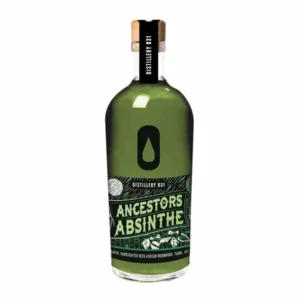
Distillery 031 – Ancestors Absinthe Location: Durban, South Africa Price: Approximately R450-R550 per 750ml bottle ABV: 60% Features: Made with African wormwood and Impepho (Zulu medicinal herb) Awards: Gold Medal 2017 New York International Spirits Competition Available at: Bar Keeper (Cape Town), Norman Goodfellows, Fine Beverages
Bar Keeper Address: 103 Strand St, Cape Town City Centre Contact: +27 21 422 1024 Brands: Pernod Absinthe, Ancestors Absinthe, imported brands Delivery: Available via Uber Eats
Jorgensen’s Distillery Address: Regent Street, Wellington, 7654 Contact: +27 21 864 1777 Hours: Open until 4:45PM Products: Field of Dreams Absinthe
Woodstock Liquors (Online) Contact: 083 280 5303 Email: [email protected] Website: woodstockliquors.co.za Note: Specializes in spirits delivery (Western Cape)
Norman Goodfellows Multiple locations across South Africa Brands: Ancestors Absinthe, imported selections Stock availability varies by location
Prices
In South Africa, expect to pay:
- Local craft absinthe (Black Horse, Ancestors): R450-R600 per 750ml bottle
- Imported brands (Pernod, European brands): R700-R1,200 per 750ml bottle
- Premium/vintage selections: R1,200+ per 750ml bottle
At bars and clubs, absinthe shots typically range from R50 to R85, with craft cocktails featuring absinthe running R85-R150 depending on the establishment. Upmarket venues in Cape Town and Johannesburg may charge more for premium brands.
FAQs
Is absinthe hallucinogenic? No! This is the biggest myth about absinthe. While wormwood contains thujone, a compound that can cause convulsions in extremely high doses, properly distilled absinthe contains only trace amounts (under 10 parts per million). You’d die from alcohol poisoning long before thujone could affect you. The hallucination stories came from chronic alcoholics drinking massive quantities of 68% alcohol daily.
Is absinthe legal in South Africa? Yes, absinthe is perfectly legal in South Africa! It’s available at specialty liquor stores, craft distilleries, and some bars. We even have local producers like Distillery 031 and Black Horse Distillery making award-winning South African absinthe.
How do you drink absinthe properly? Never drink absinthe straight (unless you enjoy pain). Use the traditional French method: pour 30ml absinthe into a glass, place a perforated spoon with a sugar cube on top, and slowly drip 90-150ml of ice-cold water over the sugar into the absinthe. Watch it louche (turn cloudy), then sip slowly. The water-to-absinthe ratio should be 3:1 to 5:1, depending on your preference.
What’s the difference between green and clear absinthe? Green absinthe (verte) gets its colour from a secondary maceration with chlorophyll-rich herbs like petite wormwood and hyssop. Clear absinthe (blanche or la bleue) skips this step and is bottled directly after distillation. Both can be excellent – it’s a style preference, not a quality indicator.
Does absinthe taste like black liquorice? Quality absinthe has prominent anise and fennel notes, which do taste similar to liquorice, but it’s far more complex. Expect herbal, botanical flavours with sweet and bitter balance, not one-dimensional candy flavour. If it tastes exactly like cheap liquorice, you’ve got a poor-quality absinthe.
Can you use absinthe in cocktails? Absolutely! Absinthe is a versatile cocktail ingredient. It’s essential in classics like the Sazerac, Corpse Reviver No. 2, and Obituary. Many modern mixologists use it as a rinse (coating the glass) or in small amounts (5-10ml) to add complexity to gin, vodka, or rum cocktails.
Why was absinthe banned for so long? Politics and propaganda, mostly. Wine producers saw absinthe as competition during the late 1800s when it became more popular than wine in France. Temperance movements seized on questionable research linking wormwood to seizures, and the “absinthism” diagnosis was created. Modern science proved the bans were unnecessary – properly made absinthe was never dangerous beyond its high alcohol content.
Whether you’re a spirits enthusiast looking to explore legendary drinks or just someone who wants to feel like a 19th-century artist (minus the tuberculosis), absinthe offers a unique experience. The ritual, the history, the complexity – it’s all part of the magic. Just remember to dilute it properly, sip responsibly, and never, ever set it on fire despite what you might see on the internet. The Green Fairy rewards respect and patience.
Cheers (or should we say, à votre santé!), and may your absinthe sessions be filled with creativity, good conversation, and zero hallucinations.